
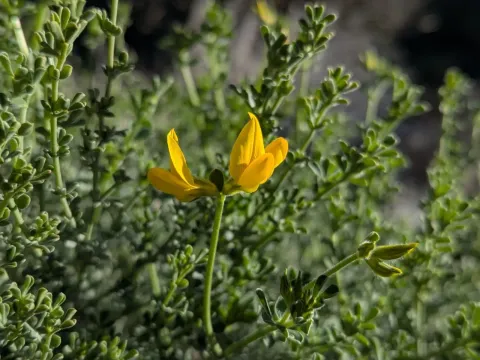
Pedrosia
Pedrosia
Pedrosia, a member of the Fabaceae family, requires precise timing for sowing to establish a robust plant population in the field.
What the section contains
Pedrosia
The primary planting window occurs in early spring, once soil temperatures consistently stay above the threshold for seed germination.
Farmers should focus on achieving a shallow seeding depth, typically 2-3 cm, to ensure efficient emergence of the young seedlings.
Proper field leveling is essential prior to sowing to ensure uniform depth and moisture contact across the entire planting area.
Row spacing should be managed to optimize the balance between plant density and the availability of sunlight and soil nutrients.
This crop thrives in well-drained, light-textured soils that offer excellent aeration and prevent waterlogging around the root system.
Pedrosia is well-regarded for its adaptability to semi-arid conditions, displaying significant drought tolerance throughout its growing cycle.
Full sun exposure is a critical requirement, as the plant competes poorly with shading or heavy weed pressure during its vegetative phase.
Soil pH levels should be maintained in the neutral to slightly alkaline range to maximize the plant's ability to uptake necessary microelements.
Strategic nutrient management, particularly with phosphorus and potassium, helps to support healthy root development and biomass accumulation.
The yield potential of Pedrosia is primarily influenced by the environmental conditions during the initial months of the growing season.
Under optimal management, the crop produces a significant amount of forage biomass, which serves as a valuable resource for local livestock systems.
Harvesting efficiency is improved by maintaining clean fields free of aggressive weeds, which ensures higher harvest indices.
Consistency in yield is achieved through regular monitoring and timely intervention if environmental stressors impact the crop health.
Proper management of the second and third cuts in a season can lead to sustainable biomass production over multiple years.
The main pathological concerns involve fungal infections that tend to thrive during periods of high humidity and stagnant air circulation.
Insects, particularly root-feeding pests, present a constant threat that can reduce the plant's vigor and its natural nitrogen-fixing capacity.
- fusarium wilt under thermal stress conditions
- aphid infestations in early vegetative stages
- leaf spot diseases caused by excessive moisture
Integrated pest management strategies are recommended to mitigate damage while preserving the ecological balance of the field environment.
Routine scouting for symptoms of disease allows for early intervention, preventing potential outbreaks from spreading across the crop field.