
Rogeria
Rogeria
Rogeria is a genus well-adapted to arid agricultural conditions, with sowing schedules typically designed to avoid frost and capitalize on the beginning of the rainy season.
What the section contains

Rogeria
Optimal planting occurs when soil temperatures are consistently warm, as the seeds are highly sensitive to cold soil environments which delay germination.
Seeds should be planted at a shallow depth of 2 to 3 centimeters to ensure sufficient energy for the seedlings to emerge effectively.
Field layouts prioritize row spacing that allows for maximum sunlight penetration, which is vital for the development of healthy, robust foliage.
Seedbed preparation should focus on achieving a fine tilth, ensuring good contact between the seed and the soil for uniform germination across the field.
As a member of the Pedaliaceae family, Rogeria shares specific heat requirements with crops like sesame, making it ideal for tropical and subtropical climates.
The crop thrives in light-textured soils, particularly sandy or sandy loam types, which facilitate excellent root drainage and oxygenation.
While Rogeria displays remarkable drought tolerance, supplemental moisture during the flowering and pod-filling stages is critical for achieving high yields.
High levels of solar radiation are essential for the metabolic processes of this plant, which makes it a poor candidate for shaded or cloudy environments.
Soil fertility management should focus on balanced nutrient application, although the plant has evolved to survive in low-nutrient, marginal soil conditions.
Fungal pathogens associated with damp soil conditions are the primary threat, often resulting in root rot when soil moisture levels are poorly managed.
Common agricultural pests include various sap-sucking insects, such as aphids, which can stunt growth and transmit viral diseases across the plantation.
Root-knot nematodes are a significant concern in continuous cropping systems, necessitating strict adherence to crop rotation cycles to maintain soil health.
Bacterial blight can develop in environments with high ambient humidity, leading to leaf wilting and potential total loss of the floral parts.
Integrated Pest Management (IPM) strategies, including the use of treated seeds and timely monitoring, are recommended to mitigate these biotic risks.
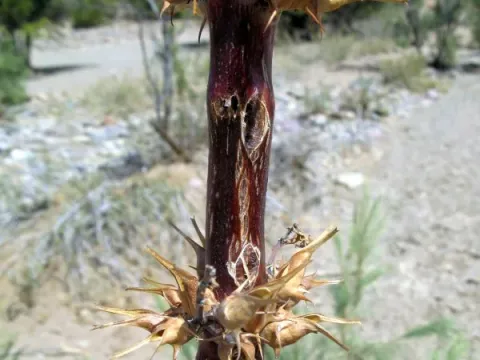
Timing the harvest is crucial for Rogeria, as many species within this genus possess dehiscent capsules that shatter easily upon maturity.
Harvesting should commence as soon as the seed pods begin to turn brown, signaling that the moisture content is optimal for seed development.
Manual harvesting is common in small-scale operations, but specialized machinery is utilized in commercial setups to minimize seed loss during the cutting process.
Post-harvest drying is a non-negotiable step to reduce the seed moisture content, thereby preventing the proliferation of storage molds and fungi.
Given the high oil content of the seeds, proper storage facilities with climate control are required to maintain quality and prevent rancidity of the lipids.