
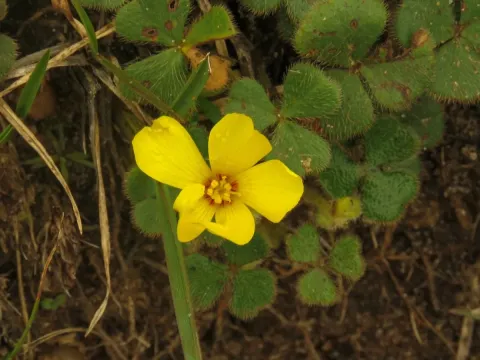
Oxalis eriocarpa
Oxalis eriocarpa
Oxalis eriocarpa is a perennial herb belonging to the Oxalidaceae family. This species is recognized for its unique botanical features, specifically the morphology of its seed capsules, which are covered in fine, dense trichomes.
What the section contains
Oxalis eriocarpa
The crop requires well-drained, nutrient-rich soils to thrive. It performs best in loamy substrates with a balanced mineral composition. Soil aeration is critical, as the roots are sensitive to compaction and prolonged waterlogging.
Climatically, it favors temperate zones with moderate rainfall. While it can withstand periods of mild drought, active vegetative growth depends on consistent moisture availability throughout the growing season.
Agronomic practices for this species include precise spacing to allow for adequate airflow between plants. Supplemental fertilization with nitrogen and potassium is often applied during the early stages of spring development.
Economically, while not a mass-market crop, it is studied for its chemical composition and is increasingly used in specialized nurseries for its hardiness and ornamental value.
The primary threat to the crop is root rot caused by pathogens like Pythium and Phytophthora, particularly in poorly drained fields. Mitigation strategies include improving soil drainage and monitoring moisture levels.
In terms of pests, spider mites are a significant concern during dry and hot weather. They rapidly colonize the foliage, leading to chlorosis and potential plant decline if left untreated.
Effective pest management relies on early detection and the use of integrated pest management (IPM) practices, including the release of predatory mites and the application of horticultural soaps.
Fungal diseases such as powdery mildew may appear if the canopy density is too high and humidity remains trapped, necessitating regular pruning or thinning of the plants.
Maintaining field hygiene, including the removal of infected plant material and weeds, is a fundamental component of keeping the crop healthy throughout the harvest cycle.