
Magellanic woodsorrel
Oxalis magellanica
Description
Growing requirements
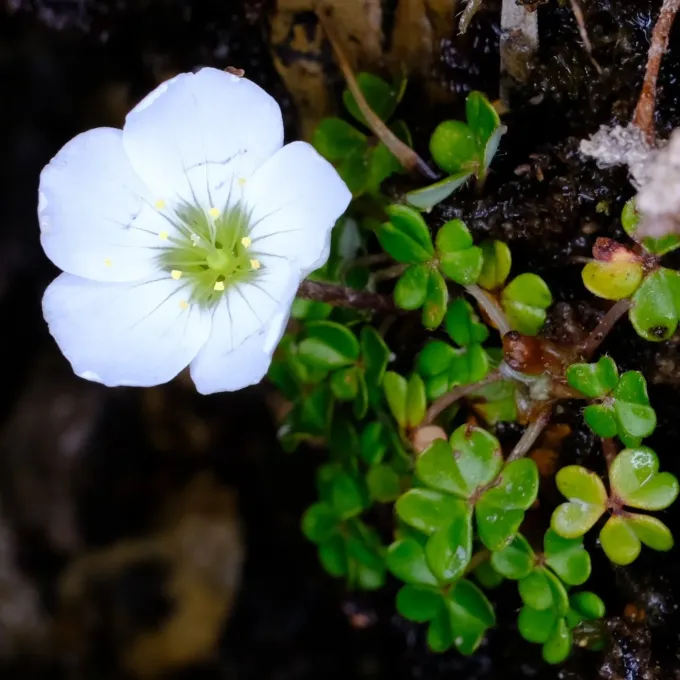
Magellanic woodsorrel (Oxalis magellanica) is a perennial herbaceous plant belonging to the Oxalidaceae family, native to the cool and humid regions of southern South America.
The plant is characterized by its compact, creeping habit, featuring small, trifoliate leaves and delicate white flowers that bloom in late spring and early summer.
In terms of climate, this species thrives in maritime environments with stable, cool temperatures, making it a challenging but rewarding subject for specialized gardeners.
Soil requirements involve a high proportion of organic matter mixed with grit or coarse sand to ensure perfect drainage, as the plant cannot tolerate waterlogged roots.
Regular maintenance involves keeping the soil consistently moist but never soggy, and protecting the plant from intense direct midday sun which can scorch its foliage.
Main diseases and pests
The most significant threat to Magellanic woodsorrel is fungal infection caused by stagnant water or poor air circulation within the dense foliage of the plant.
Slugs and snails are the primary pests, particularly in humid garden settings, often consuming young leaves and flowers during the nocturnal hours.
Root rot is a common physiological problem when the substrate lacks adequate aeration, leading to the rapid decline and death of the entire plant cluster.
High environmental temperatures can induce heat stress, causing the plant to go dormant or suffer from severe metabolic disruption in its subantarctic nature.
Integrated pest management, including regular weeding and maintaining a clean environment around the plant base, is essential for successful, long-term growth.