
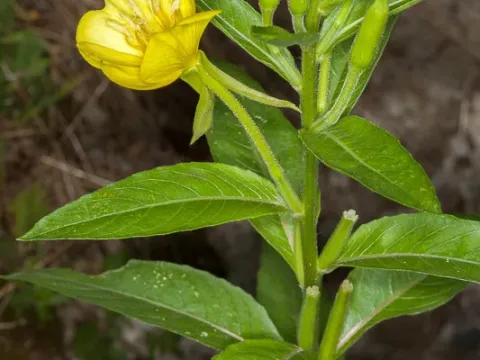
Chicago evening primrose
Oenothera chicagoensis
Chicago evening primrose (Oenothera chicagoensis) belongs to the Onagraceae family. This crop, valued for its oil-rich seeds, is typically sown in the spring once soil temperatures reach 10–12 degrees Celsius.
What the section contains
Chicago evening primrose
Due to the small size of the seeds and their requirement for light during germination, they are sown either on the surface or buried at a very shallow depth. In industrial agriculture, a row cropping method with 45–60 cm spacing is common.
Fall sowing is an option in regions with milder winters, as exposure to cold temperatures promotes natural stratification, leading to earlier and more uniform seedling emergence in the following season.
Seeds should be covered with no more than 0.5–1 cm of soil. It is crucial to use a roller after sowing to ensure proper soil-to-seed contact, as moisture loss in the topsoil can severely impact the germination rate of such fine seeds.
The recommended seeding rate is between 2 and 4 kilograms per hectare. Adequate stand density is necessary during the early stages of growth to suppress weed competition, as the crop exhibits slow initial development.
The plant thrives in well-drained sandy or loamy soils with a neutral to slightly acidic pH. Chicago evening primrose is noted for its drought tolerance, making it suitable for cultivation on soils that might not support more water-demanding crops.
Sunlight is a critical requirement for this species. Fields must be located in open areas without shading from nearby trees or tall buildings, as optimal flower production and seed maturation depend heavily on full sun exposure.
It is well-adapted to temperate climates and can withstand significant seasonal temperature variations. Its hardy nature makes it a robust choice for farmers looking to diversify their agricultural output on marginal lands.
Balanced fertilization is advised, with a focus on phosphorus and potassium to boost oil accumulation in the seeds. Excessive nitrogen application should be avoided, as it encourages excessive vegetative growth at the expense of reproductive output.
Effective weed management before sowing is essential. Since the seedlings develop slowly, competition from invasive grasses or broadleaf weeds can lead to significant crop failure if not controlled during the first months of growth.
The primary economic value of Chicago evening primrose lies in the extraction of gamma-linolenic acid (GLA) from its seeds. Under favorable growing conditions, yields can reach 8–12 centners per hectare.
The oil content in the seeds is influenced by climatic conditions, especially temperature patterns during the flowering and grain-filling stages. Stable and warm weather conditions are essential for maximizing the concentration of high-quality fatty acids.
Pollination success is a vital yield determinant, as the flowers primarily bloom in the evening. Maintaining a healthy habitat for nocturnal pollinators, such as moths, is a key component for ensuring high seed set rates in the capsules.
Yields are often higher in the second year of growth, as the plant develops a more robust root system during its initial season. This makes the species suitable for management strategies that leverage multi-year harvests.
Timely harvesting is essential to prevent seed loss due to natural dehiscence. Constant monitoring of capsule color and moisture levels allows farmers to initiate the harvest at the peak of maturity, minimizing field waste.
Powdery mildew is the most common fungal disease, particularly in high-humidity environments. Crop rotation and maintaining optimal plant spacing to ensure airflow are the primary methods for preventing outbreaks.
Pests such as aphids and various weevils can damage young foliage and developing flower buds. Integrated Pest Management (IPM) practices should be used to protect the crop while avoiding the use of broad-spectrum pesticides that could harm essential pollinators.
Root rot is a risk in fields with poor drainage or during periods of excessive rainfall. Site selection should prioritize areas where water does not pool, as stagnant moisture is detrimental to the plant’s root health.
Weed interference is the most significant threat during the seedling stage. Mechanical cultivation between rows is often preferred over chemical herbicides to ensure the safety of the crop and the surrounding environment.
A comprehensive strategy combining cultural, mechanical, and biological controls is the most effective approach for ensuring long-term crop health and consistent production of high-quality seed material for pharmaceutical use.
Harvesting Chicago evening primrose begins when the capsules turn brown and reach technical maturity. The most efficient approach is a two-stage process: swathing or windrowing, followed by combining after the material has dried.
Threshing parameters must be carefully calibrated to avoid damaging the small, delicate seeds. Low drum speeds and appropriate screen settings are necessary to maintain seed integrity during the mechanical collection process.
Post-harvest cleaning is mandatory to remove chaff and field debris. Utilizing high-efficiency separators ensures that the raw material meets the strict quality standards required for pharmaceutical and cosmetic ingredient production.
After cleaning, seeds should be dried to a moisture content of 9–10 percent to ensure safe storage. Active ventilation is the preferred drying method as it prevents overheating, which can degrade the quality of the delicate oils.
Storage should take place in a cool, dark, and well-ventilated facility. Maintaining these conditions protects the chemical stability of the seed oil until it is processed by manufacturers into final consumer products.