
Bolivian fuchsia
Fuchsia boliviana
Description
Growing requirements
Bolivian fuchsia (Fuchsia boliviana) belongs to the Onagraceae family and is native to the Andean regions of South America, thriving in high-altitude cloud forests characterized by cool temperatures and high humidity.
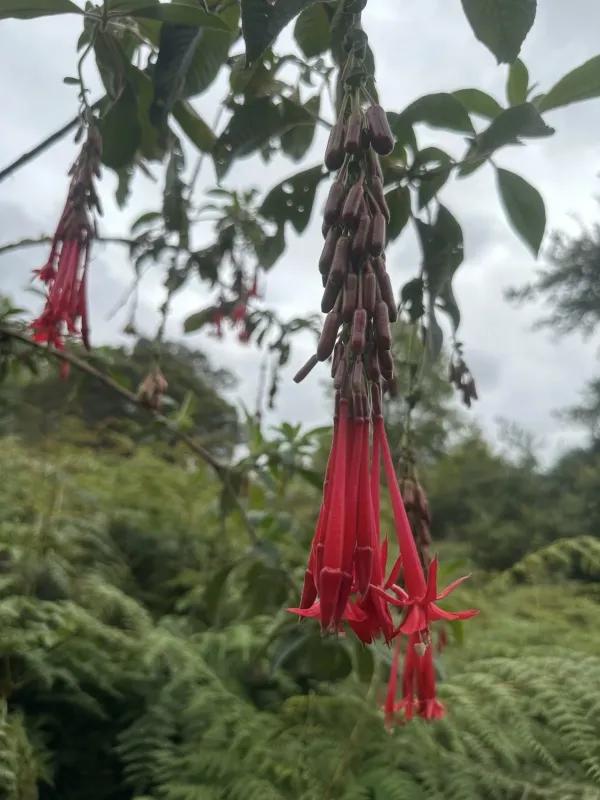
This species is highly regarded for its large, velvety leaves and dramatic, pendulous racemes of long, tubular, deep-red flowers that can reach significant lengths throughout the growing season.
Successful cultivation requires a location with bright, filtered light as exposure to direct midday sun can severely damage the foliage and cause the plant to wilt rapidly.
The soil should be consistently moist, rich in organic matter, and slightly acidic to neutral, ensuring that it remains well-drained to prevent any possibility of root rot during active growth.
Given its tropical mountain origins, this plant performs best in environments where temperatures remain stable, avoiding both excessive heat and freezing conditions that would lead to plant death.
Main diseases and pests
Whiteflies are perhaps the most persistent pest for Bolivian fuchsia, especially when grown in greenhouses or indoor environments, requiring consistent monitoring and intervention with insecticidal soaps.
Spider mites often attack the plant if the ambient humidity is too low, necessitating regular misting or the use of humidifiers to protect the plant's structural integrity and aesthetic value.
Root rot, primarily caused by species of Phytophthora, is a common threat triggered by overwatering and waterlogged soil conditions that suffocate the delicate root system.
Aphid infestations can occur during the spring growth phase, causing stunted shoots and distorted leaves that limit the plant's ability to produce flowers effectively.
Botrytis, a fungal blight, may develop in conditions of high humidity and poor ventilation, often presenting as fuzzy grey mold on damaged flowers or leaves that have fallen into the base of the plant.