
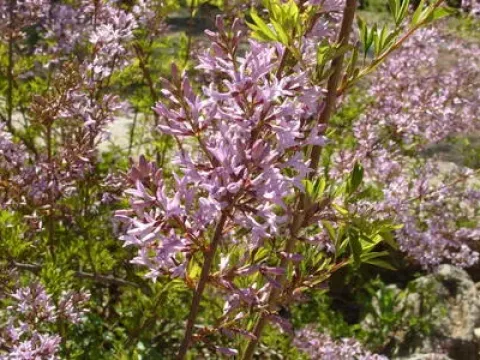
Persian lilac
Syringa persica
Persian lilac (Syringa persica) is a deciduous shrub belonging to the Oleaceae family. It is a sterile hybrid species that has become a staple in traditional ornamental horticulture due to its graceful habit and abundant, fragrant floral displays.
What the section contains
Persian lilac
Originating from the regions of Afghanistan and Iran, this species thrives in climates with warm, dry summers. It is widely recognized for its smaller, more delicate foliage and slender, arching stems that distinguish it from the common garden lilac varieties.
For optimal growth, this plant requires a location with full sun exposure, receiving at least six hours of direct light daily. A well-drained, fertile soil with a slightly alkaline or neutral pH is ideal to ensure the plant reaches its full vigor and longevity.
Cultural requirements include consistent watering during the establishment phase and throughout dry spells. Applying organic mulch around the base helps maintain soil moisture levels and suppress weed growth, which is essential for healthy root development.
In landscape design, this shrub is highly valued for its versatility. It can be used as a specimen plant, in mixed shrub borders, or pruned into small hedges. Its ability to tolerate urban conditions makes it a popular choice for city parks and residential gardens.
Common diseases affecting this plant include powdery mildew, which appears as a white dusty coating on the leaves during periods of high humidity. Improving air circulation around the shrub is a primary cultural method to reduce the risk of infection.
Pest management should focus on monitoring for scale insects and lilac borers. If an infestation occurs, horticultural oils or appropriate systemic insecticides should be applied to prevent permanent damage to the structural integrity of the branches.