
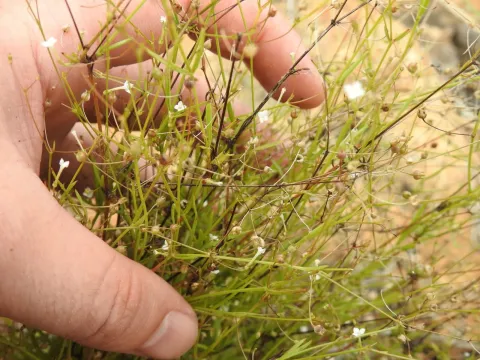
Oldenlandia heynei
Oldenlandia heynei
Oldenlandia heynei is a perennial herbaceous plant belonging to the Rubiaceae family. It is recognized for its adaptability to moist, tropical environments where it thrives as an understory or riparian vegetation component.
What the section contains
Oldenlandia heynei
The plant exhibits small, opposite, lanceolate leaves and delicate floral structures typical of the genus. Its biological cycle is largely dependent on consistent moisture levels, making it a sensitive indicator of environmental health in its natural range.
In terms of climatic requirements, Oldenlandia heynei demands high humidity levels and stable warm temperatures. It is not cold-hardy, and frost can result in total plant mortality, requiring glasshouse protection in temperate climates.
Soil quality is paramount for optimal productivity. The ideal medium is a well-draining, nutrient-rich substrate with a slightly acidic profile. Organic matter incorporation is recommended to enhance soil structure and moisture retention capacity.
Agricultural management requires careful planning of light exposure. While it prefers bright, filtered sunlight, excessive direct irradiation can cause leaf scorch, particularly when combined with low ambient humidity levels.
The primary threats to Oldenlandia heynei include fungal infections such as root rot, which typically manifest in poorly aerated or waterlogged soils. Early detection and substrate drainage adjustment are key preventive measures.
Common agricultural pests affecting this crop include spider mites and aphids. These insects tend to proliferate during warm, dry periods, potentially compromising the overall vitality and medicinal quality of the harvest.
Bacterial pathogens can cause foliage wilting if plant spacing is inadequate. Maintaining proper airflow between individual plants is a fundamental practice to mitigate the risk of pathogen spread within a commercial planting unit.
- Monitor leaf undersides weekly for early signs of infestation.
- Use sterile tools during pruning or harvesting activities.
- Ensure irrigation water quality meets safety standards to avoid contamination.
Integrated pest management strategies focusing on biological controls are strongly encouraged to preserve the chemical integrity of the plants. Avoiding prophylactic chemical sprays helps maintain a sustainable and high-quality crop yield.