
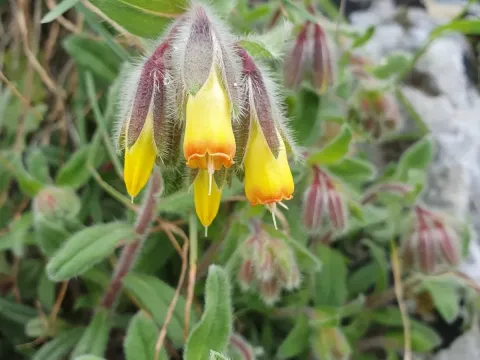
Onosma frutescens
Onosma frutescens
Onosma frutescens, commonly known as a species of golden drop, belongs to the Boraginaceae family. It is a perennial herbaceous plant native to the Mediterranean region, typically found in dry, rocky, and calcareous environments.
What the section contains
Onosma frutescens
Botanically, the plant is characterized by its woody base and dense, pubescent foliage, which serves as a physiological adaptation to arid climates. It thrives in full sunlight, requiring high light intensity to maintain its compact growth habit and promote prolific flowering.
Regarding soil requirements, Onosma frutescens demands extremely well-drained substrate. Heavy or clay-rich soils are unsuitable as they promote root rot; therefore, gardeners often amend the soil with coarse sand, grit, or crushed limestone to mimic its natural habitat.
In terms of climatic adaptability, this species is highly drought-tolerant once established. However, it is sensitive to high humidity and winter precipitation, which can cause significant damage to the plant's root system and foliage during dormancy.
Economically, the plant is primarily cultivated for ornamental purposes in rock gardens, scree slopes, and xeriscaping projects. Its ability to thrive in challenging, nutrient-poor conditions makes it a valuable asset for low-maintenance landscaping and biodiversity-friendly horticulture.
The most significant threat to Onosma frutescens is the development of fungal pathogens, particularly root and crown rots caused by Phytophthora or Pythium species. These conditions are usually triggered by poor soil drainage and waterlogging.
Insect pests include aphids, which may cluster on the flower buds during the spring growth phase. Additionally, spider mites can become an issue in exceptionally hot and dry conditions, causing the foliage to lose its characteristic vibrant appearance.
To mitigate these risks, it is essential to ensure adequate air circulation around the plants. Avoiding overhead irrigation is a standard practice to keep the leaves and crown dry, effectively reducing the likelihood of fungal infections.
In cases of severe infestation, targeted application of environmentally safe insecticides is recommended. However, cultural practices, such as ensuring a mineral-rich, stony mulch, are generally more effective in maintaining long-term plant health.
Gardeners should monitor for signs of chlorosis or wilting, which may indicate issues with soil chemistry or drainage. Regular inspection of the plant base helps in the early detection of rot and allows for prompt intervention to save the specimen.