
Pekin lilac
Syringa pekinensis
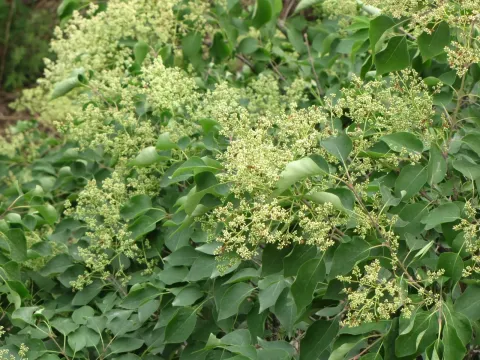
The Pekin lilac (Syringa pekinensis) is a deciduous woody species belonging to the Oleaceae family. It typically grows as a small tree or large shrub, valued for its unique, peeling, cherry-like bark and large, showy inflorescences.
What the section contains
Pekin lilac
Native to Northern and Central China, this species is well-adapted to various temperate climates. It requires full sun to partial shade for optimal blooming, demonstrating high environmental resilience, including moderate tolerance to urban air pollutants.
Soil requirements focus on fertility and drainage. It thrives in well-aerated, loamy soils with a pH level ranging from neutral to slightly alkaline. It is imperative to avoid waterlogged conditions to prevent root rot, especially in heavy clay substrates.
Standard cultivation practices include consistent watering during the establishment phase and annual nutrient application in early spring to support vigorous branch growth. Minimal pruning is required to maintain its natural architectural form, which is a major aesthetic advantage.
The Pekin lilac is primarily used in ornamental horticulture. Its late-season bloom provides garden interest when many other spring shrubs have finished, making it a perfect candidate for specimen planting, mixed borders, or formal public landscapes.
Common pathological threats include powdery mildew and leaf spot fungi, which typically arise in conditions of high humidity and poor air circulation. Proper spacing between individual plants is the best defense against these outbreaks.
Pests that may affect the plant include lilac borers, scale insects, and aphids. Integrated pest management, including monitoring the bark and leaves for signs of infestation, is essential for maintaining the longevity and vigor of the specimen.