
Musa violascens
Musa violascens
Musa violascens is a perennial herbaceous plant belonging to the Musaceae family. It originates from the tropical regions of Southeast Asia, where it thrives in humid, shaded forest environments.
What the section contains
Musa violascens
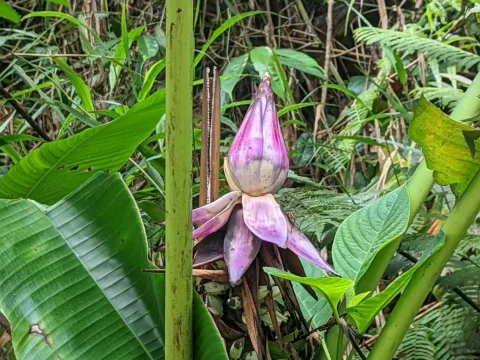
The plant is highly valued for its striking appearance, specifically the purplish hues found on its pseudostems and inflorescences. Its lush, large leaves provide a significant aesthetic appeal, making it a popular choice for collectors of exotic flora.
Optimal growth requires a warm tropical climate, with temperatures consistently between 22 and 28 degrees Celsius. The plant cannot tolerate frost and must be protected from cold drafts, making it suitable for greenhouses or indoor conservatories in temperate zones.
Soil requirements involve a rich, well-draining substrate that retains moisture without becoming waterlogged. A mixture based on peat, perlite, and organic matter is typically recommended to support healthy root development.
Cultural practices focus on consistent hydration and regular fertilization during the growing season. High air humidity is essential, and misting the foliage or using a humidifier can significantly improve the plant's overall health and vitality.
The most common pests affecting Musa violascens are spider mites, which thrive in low-humidity conditions. Maintaining high moisture levels around the foliage is a primary method of prevention and control.
Root rot remains a frequent threat, often caused by overwatering or inadequate soil drainage. If the soil remains saturated for extended periods, the roots will quickly deteriorate, leading to plant collapse.
Fungal infections, such as leaf spot diseases, can occur if ventilation is poor. Ensuring adequate air circulation around the canopy helps reduce the risk of these pathogens taking hold on the leaf surfaces.
Mealybugs can also occasionally infest the crevices of the pseudostems, requiring targeted applications of horticultural soap or systemic insecticides if the infestation is severe.
Regular inspection and sanitation are vital for maintaining plant health. Prompt removal of damaged or dead foliage helps reduce the potential breeding grounds for various pests and fungal diseases.