
Pink banana
Musa rosea
Description
Growing requirements
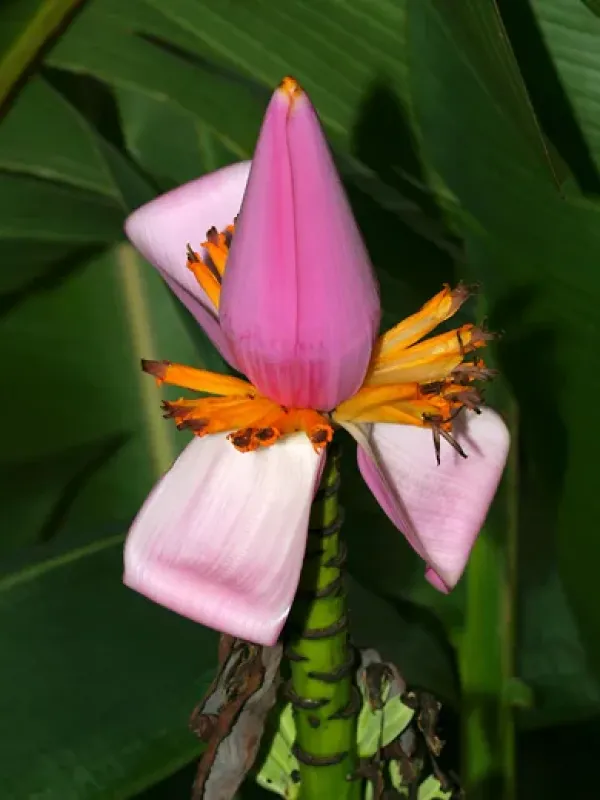
Musa rosea, commonly known as the pink banana, belongs to the Musaceae family. It is a perennial herbaceous plant native to the tropical regions of Southeast Asia.
The plant requires a consistent tropical climate to thrive, with ideal temperatures ranging between +22 and +28 degrees Celsius throughout the growing season.
For optimal growth, provide a well-draining, nutrient-rich soil mix with a slightly acidic to neutral pH level. Proper aeration of the root zone is crucial for preventing physiological stress.
Light requirements are significant: the plant prefers bright, indirect sunlight. Prolonged exposure to harsh, direct midday sun can result in leaf scorching and dehydration.
Humidity levels should be maintained between 70% and 80%. If the ambient air is too dry, leaves may brown at the edges, necessitating the use of misting or a humidifier.
Yield
Musa rosea is cultivated primarily as an ornamental specimen rather than a food crop. Its fruit is visually striking due to its bright pink color, but it is seeded and not typically consumed.
The plant is highly valued in interior design and conservatory landscaping for its architectural foliage and unique, colorful inflorescences that attract significant attention.
Flowering usually occurs when the plant is mature, displaying upright, vibrant pink flower stalks that last for several weeks before developing into small, decorative fruit clusters.
Propagation is most efficiently achieved by separating the suckers (pups) that sprout from the base of the main pseudostem once they have developed their own root system.
As an ornamental, its "yield" is measured by the aesthetic value and the number of vegetative offsets produced annually, rather than harvestable food volume.
Main diseases and pests
Spider mites are the most prevalent pest for Musa rosea, especially in indoor environments where air circulation is low and humidity levels are insufficient.
Root rot, caused by overwatering or compacted soil, remains the most severe threat to the plant's health. It is essential to ensure that the pot has adequate drainage.
Scale insects and mealybugs can also infest the foliage, particularly on the underside of leaves and near the stem base, requiring prompt removal or chemical intervention.
To mitigate disease risk, avoid water accumulation on the leaves and in the crown of the plant, as this provides a breeding ground for fungal pathogens and bacterial infections.
Regular maintenance, including cleaning leaves and checking for pests, is recommended to ensure the long-term vigor and display quality of this exotic botanical species.