
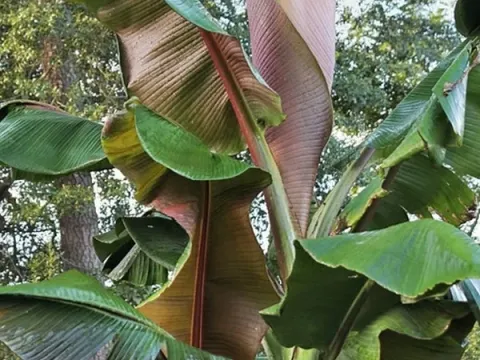
Musa thomsonii
Musa thomsonii
Musa thomsonii is a perennial herbaceous plant belonging to the Musaceae family, native to the high-altitude regions of the Himalayas, including Northern India and Bhutan. Unlike tropical dessert bananas, this species is noted for its relative hardiness and its ability to thrive in cooler, mountainous environments.
What the section contains
Musa thomsonii
The plant features a sturdy pseudostem that can reach heights of several meters, topped with large, vibrant green leaves. A distinguishing botanical feature is its erect inflorescence, often displaying unique, colorful bracts that set it apart from other banana varieties commonly found in cultivation.
Optimal growth requires well-drained, fertile soil rich in organic matter. A key agricultural requirement is to maintain a slightly acidic soil pH while ensuring that the root system is protected from prolonged waterlogging, which often leads to root rot in this species.
Regarding climate, the plant prefers humid conditions and partial shade, especially in hotter regions, to prevent leaf scorching. While it can withstand cooler temperatures than many Musa species, it still requires protection from frost and severe winds that can shred its broad leaves and weaken the plant.
In terms of agricultural and landscape application, Musa thomsonii is primarily valued as an ornamental specimen in botanical gardens and temperate climate landscapes. While the fruit is technically edible, it is characterized by numerous hard seeds, making it unsuitable for commercial food production, yet it remains a significant botanical specimen.
Common pathological issues include fungal diseases like Panama wilt (Fusarium oxysporum) and Sigatoka leaf spot, which are particularly prevalent if humidity management is poor and there is inadequate spacing between plants.
Pests that frequently affect the plant include the banana aphid and several species of mites. Integrated pest management, such as consistent monitoring and ensuring adequate plant nutrition, is essential to minimize the damage caused by these insects.