
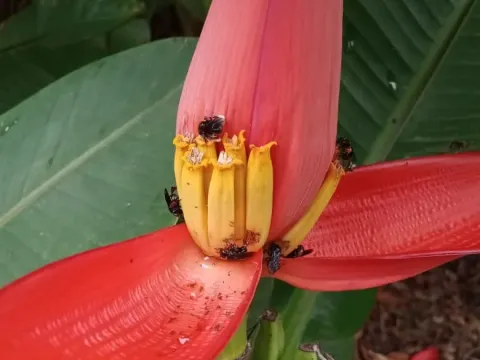
Musa rubra
Musa rubra
Musa rubra is a member of the Musaceae family, recognized for its compact size and striking foliage. Native to the tropical regions of Southeast Asia, this species thrives in humid, shaded environments.
What the section contains
Musa rubra
The plant requires high levels of ambient humidity to prevent leaf tip browning. Regular misting or the use of an ultrasonic humidifier is recommended if indoor air is dry.
Soil composition must be rich in organic matter and possess excellent drainage capabilities. A mixture of peat moss, perlite, and composted bark provides the ideal growing medium.
Temperature management is critical; the plant should be kept away from air conditioning vents or cold drafts, maintaining a steady climate ideally above 20 degrees Celsius year-round.
Bright, filtered light is necessary for photosynthesis. Direct, harsh sunlight can damage the leaves, while insufficient light leads to spindly, slow growth.
Spider mites are the most frequent pests, appearing primarily during low-humidity months and feeding on the undersides of leaves, causing discoloration.
Root rot is a major threat caused by overwatering or compacted soil. It is essential to ensure that the water drains freely to prevent waterlogging of the rhizomes.
Mealybugs may also infest the plant, settling in the leaf axils. Regular inspection and wiping with alcohol-soaked swabs are effective control measures.
Fungal infections can manifest as black spots on leaves, which usually occur when water sits on the foliage for extended periods in poorly ventilated areas.
To maintain plant health, it is vital to apply organic insecticides or neem oil preventively, ensuring the plant remains robust against potential pest attacks.