
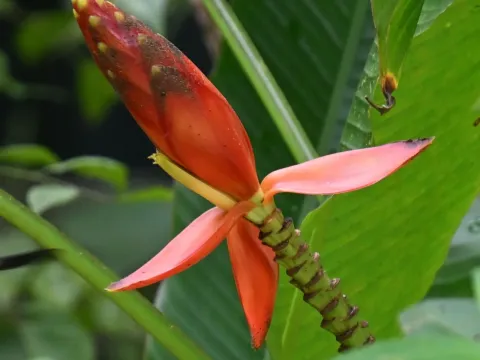
Musa beccarii
Musa beccarii
Musa beccarii is a wild species belonging to the Musaceae family. It is native to the tropical rainforests of Borneo, where it thrives in the understory of dense forest ecosystems.
What the section contains
Musa beccarii
The plant requires a strictly tropical environment with high atmospheric humidity and consistently warm temperatures throughout the year to maintain its physiological functions.
It prefers fertile, well-draining soils rich in organic matter. While it loves moisture, waterlogging must be avoided, as it can lead to root rot and other fungal complications.
Botanically, this species is distinct for its compact size and non-edible fruits that are packed with seeds. Its evolutionary strategy focuses on seed dispersal rather than the fleshy fruit development seen in commercial bananas.
Its хозяйственное use is primarily centered on research and botanical conservation. It serves as a valuable genetic resource for scientists studying the diversification of the Musa genus.
Musa beccarii is susceptible to common tropical banana diseases, including Sigatoka leaf spot, which can severely impact foliage and photosynthesis.
Pests such as the banana corm weevil and various species of plant-parasitic nematodes pose a significant risk to the plant's health by damaging roots and stems.
In glasshouse environments, pests like spider mites can become a major issue if the ambient humidity is not kept sufficiently high for the plant's needs.
Effective management requires strict biosecurity measures and regular monitoring of plant health to detect early signs of infestation or infection.
Integrated pest management strategies are essential to maintain the health of these plants in botanical collections, avoiding the excessive use of harsh chemicals.