
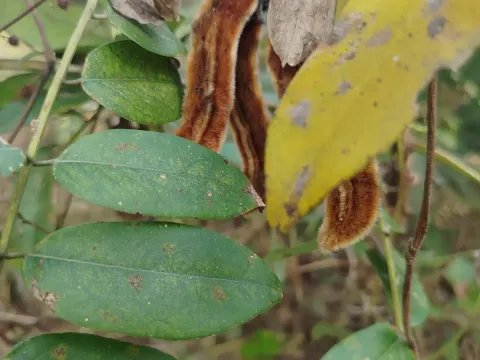
Mucuna
Stizolobium
Mucuna is a strictly tropical crop that requires warm temperatures for germination and growth. Planting should only begin after the danger of frost has passed and the soil has sufficiently warmed to at least 20 degrees Celsius.
What the section contains
Mucuna
In most tropical regions, the optimal sowing time coincides with the start of the rainy season. This timing provides the necessary soil moisture to support rapid seed germination and early development of the seedlings.
Seeds are typically planted at a depth of 3 to 5 centimeters. Proper soil contact is essential to ensure uniform germination and to prevent the seeds from drying out in the top layer of the soil.
When grown for biomass or as a cover crop, higher planting densities are utilized to create a dense canopy that suppresses weed growth. For grain production, wider spacing is preferred to improve air circulation.
The vine-like growth habit must be considered during sowing. Farmers often plant mucuna alongside maize or other sturdy crops that can serve as natural supports for the climbing vines.
Belonging to the Fabaceae family, mucuna is a highly efficient nitrogen-fixing legume. It thrives in hot, humid climates where it can complete its full lifecycle without the threat of cold stress.
The crop demands plenty of sunlight to fuel its rapid growth. Shaded environments significantly reduce the photosynthetic capacity, resulting in lower biomass production and delayed maturity.
Mucuna adapts to various soil types, including sandy and loamy soils, provided they have adequate drainage. It is highly sensitive to waterlogging, which can cause root rot and stunt growth.
The plant possesses a robust taproot system, which grants it excellent drought tolerance. Once established, mucuna can maintain high growth rates even during extended periods without significant rainfall.
As a soil-improving crop, mucuna is widely recognized for its ability to restore fertility in exhausted fields by cycling nutrients and fixing atmospheric nitrogen into the soil profile.
The biomass yield of mucuna is impressive, often reaching 30 to 50 tons per hectare depending on the length of the growing season and moisture availability. It is one of the most productive green manure options.
Grain yields generally range from 1.5 to 3 tons per hectare. This production level depends heavily on the presence of pollinating insects, as the flowers require effective pollination to set fruit.
Fertilization with phosphorus and potassium can significantly boost both vegetative growth and seed production, especially in soils that are naturally deficient in these essential nutrients.
Maximum yields are achieved when weed competition is controlled during the first few weeks. After this stage, the fast-growing vines effectively outcompete most weeds in the field.
The economic value of mucuna is not limited to the harvestable crop but also includes the long-term value generated by improved soil structure and reduced fertilizer requirements for subsequent crops.
Mucuna is generally hardy, but high humidity levels can lead to fungal diseases such as anthracnose. Implementing proper spacing and field sanitation helps to mitigate the risk of pathogen spread.
Lepidopteran larvae, such as certain species of caterpillars, can cause damage by feeding on the foliage. Integrated pest management practices are recommended to keep populations below economic injury levels.
Nematode infestation can be a concern in fields where legumes are grown continuously. Crop rotation is the most effective strategy to break the life cycle of these soil-borne pests.
While the crop is vigorous, weed management during the early establishment phase is critical. Hand weeding or mechanical cultivation may be necessary until the canopy closes.
Chemical control should be avoided or limited to ensure the quality of the green manure. Biological controls and resistant varieties offer more sustainable options for managing crop threats.
For green manure, the crop should be harvested before the onset of seed maturation, when nitrogen fixation and nutrient concentration in the plant tissues are at their peak.
Seed harvest occurs when pods become dry and dark. Careful timing is required to prevent shattering, where pods burst open and drop seeds on the ground, leading to significant yield losses.
Mechanical harvesting of mucuna can be challenging due to its climbing habit. Specialized equipment, such as cutters with pick-up reels, is often required to effectively gather the vines and pods.
Post-harvest processing involves thorough drying of the seeds to reach a moisture content of approximately 12 percent. This step is essential for safe storage and the maintenance of seed viability.
Crop residues remaining after harvest are valuable assets. When incorporated back into the soil, they act as an excellent source of organic matter, protecting the soil from erosion and compaction.