
Banana
Musa hybrids
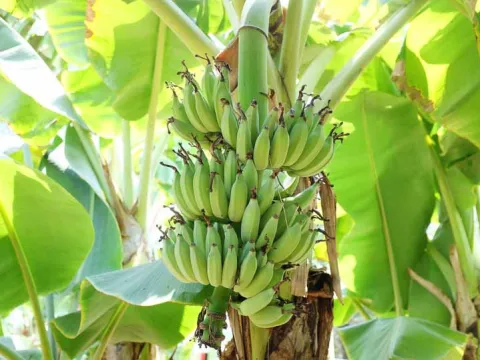
Banana (Musa hybrids) is a perennial herbaceous plant belonging to the Musaceae family. Contrary to popular belief, it is not a tree; its central structure is a pseudostem composed of tightly wrapped leaf bases reaching impressive heights.
What the section contains
Banana
Originating in the humid tropics of Southeast Asia, bananas are now cultivated globally in tropical regions. The plant thrives in environments where temperatures remain consistently between 24°C and 28°C, requiring high humidity and intense sunlight for optimal development.
The crop demands deep, fertile, and well-drained soils. Soil pH should ideally be maintained between 6.0 and 7.5. Good drainage is essential, as waterlogging is lethal to the rhizome, causing rot and restricting nutrient uptake.
Water management is the pillar of banana agronomy. A stable supply of water, preferably through precipitation or irrigation, is required year-round, as the high transpiration rate of the broad leaves makes the plant extremely sensitive to drought stress.
Economically, bananas are a vital global commodity. Beyond fresh fruit consumption, various varieties are cultivated for starch processing, livestock feed, and even textile fiber extraction, highlighting the versatility of the Musa genus.
Panama disease, caused by the Fusarium oxysporum fungus, remains the most devastating threat to banana production. It clogs the vascular system, leading to the rapid wilting and eventual death of the entire plant.
Black Sigatoka is a widespread fungal disease that attacks the leaf surface. It causes necrotic spots that significantly reduce the plant's capacity for photosynthesis, resulting in smaller, underdeveloped fruit bunches.
The banana weevil is a primary insect pest. Its larvae tunnel into the corm and pseudostem, weakening the structure of the plant and creating entry points for secondary bacterial and fungal infections.
Root-knot nematodes pose a silent but constant threat by damaging the root system. This impairment stunts growth and makes the plants highly susceptible to wind-throw, especially during heavy rains.
Integrated Pest Management (IPM) is crucial in banana farming. Growers rely on the rotation of resistant cultivars, clean cultural practices, and controlled application of biological agents to manage these recurring biotic challenges.