
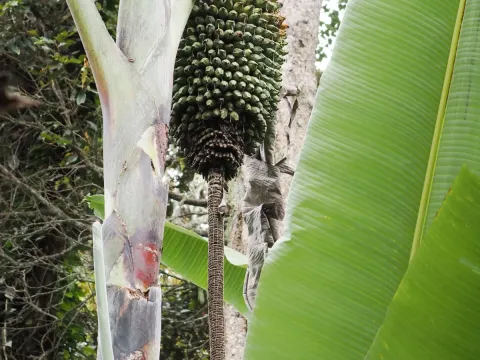
Musa ingens
Musa ingens
Musa ingens is a fascinating member of the Musaceae family and holds the record for being the largest herbaceous plant in the world. Its pseudostems can soar up to 15 meters in height with a base diameter of up to two meters, making it a true botanical marvel of the tropical world.
What the section contains
Musa ingens
This species is endemic to the montane rainforests of New Guinea, typically found at elevations between 1,500 and 2,000 meters. The plant thrives in cool, humid environments where the climate remains stable throughout the year, protected by the forest canopy.
Cultivation requirements for Musa ingens include deep, nutrient-rich, and well-draining soils. It demands a specific microclimate that mimics its high-altitude habitat, characterized by high atmospheric humidity and protection from direct, intense sunlight which can scorch the massive leaves.
In terms of agricultural techniques, this species is not suited for mass production. Its growth cycle is exceptionally long, and the fruit is filled with hard seeds, making it unsuitable for commercial food consumption compared to domesticated banana varieties found in markets today.
Agricultural interest in Musa ingens is primarily academic and conservation-based. Researchers study the plant to understand the genetic potential of the Musaceae family, hoping to find traits that could eventually improve disease resistance in commercial banana cultivars.
Musa ingens is prone to standard banana pathogens, including Fusarium wilt, also known as Panama disease. Fungal leaf spot diseases are also prevalent in environments where air circulation is restricted and humidity levels remain excessively high for extended periods.
Key agricultural pests threatening the health of this species include the banana weevil borer and various species of nematodes. These pests target the root system and the base of the pseudostem, which can result in the rapid decline and eventual death of the affected plant.