
Musa ornata
Musa ornata
Description
Growing requirements
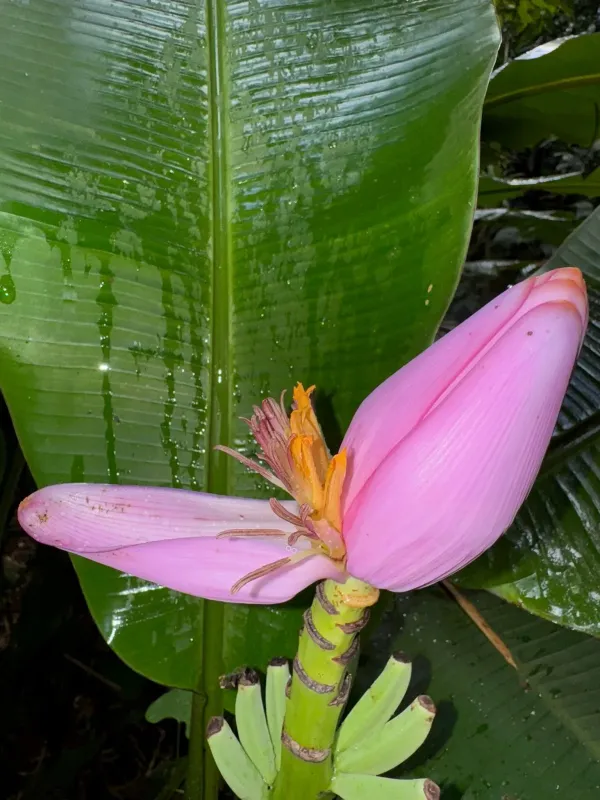
Musa ornata, commonly known as the flowering banana or ornamental banana, belongs to the Musaceae family. It is a perennial herbaceous plant valued for its decorative inflorescences that emerge in shades of pink, orange, or yellow, depending on the variety.
Native to Southeast Asia, this species thrives in tropical environments. Unlike commercial banana varieties, Musa ornata is primarily cultivated as an ornamental pot plant in non-tropical regions, requiring a controlled environment to mimic its natural habitat.
The plant requires bright, filtered light to flourish. Excessive direct sunlight can scorch the foliage, while insufficient light leads to stunted growth and failure to bloom. An east or west-facing window with light shading is generally ideal.
Temperature management is critical for this species. It prefers temperatures between 22°C and 28°C during the growing season. It is sensitive to cold, and temperatures dropping below 10°C for extended periods can cause significant tissue damage.
High humidity is essential for Musa ornata. Daily misting, the use of pebble trays, or mechanical humidifiers help maintain the required 60–70% humidity levels, preventing leaf edges from turning brown and curling.
Main diseases and pests
Spider mites are the most common pest affecting Musa ornata, especially in indoor environments with low humidity. They thrive on the undersides of leaves, causing yellowing and webbing, which can weaken the plant over time.
Mealybugs can also infest the plant, congregating in the crevices between leaf stalks. Regular inspection and wiping the leaves with a damp cloth can help detect and remove these pests early in the infestation cycle.
Root rot is a major threat caused by overwatering or poorly draining soil. To prevent this, the growing medium must be porous and include components like perlite or coarse sand to ensure water flows through freely.
Fungal leaf spots can occur when the foliage remains wet for too long in poorly ventilated conditions. Ensuring good air circulation around the plant is vital for preventing the spread of fungal spores and maintaining healthy leaves.
Proper sanitation, including the removal of dead or decaying leaves, is a fundamental part of the plant's health care protocol. Maintaining a clean growing area significantly reduces the likelihood of both pest outbreaks and bacterial infections.