
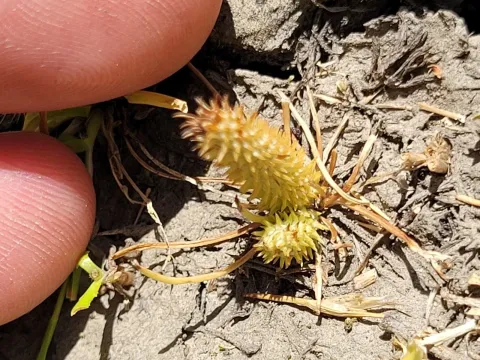
Mouse-tail
Myosurus sessilis
Myosurus sessilis, commonly known as mouse-tail, is a unique herbaceous plant belonging to the Ranunculaceae family. It is recognized by its distinct morphology, specifically the elongated receptacular spike where the seeds are borne, resembling a rodent's tail.
What the section contains
Mouse-tail
The species originates primarily from western North America, thriving in specialized habitats such as vernal pools or seasonally inundated soils. Its range is confined to areas where specific water retention properties of the soil allow for growth during the cool, wet months of spring.
Botanical characteristics include a basal rosette of linear leaves and small flowers that appear in early spring. The plant completes its life cycle relatively quickly, capitalizing on the transient moisture availability before the arrival of the summer drought period.
Regarding soil requirements, the plant necessitates clay or silty substrates that maintain high moisture levels for a significant portion of its developmental phase. Exposure to direct sunlight is vital, as the species lacks the height to compete in overgrown or shaded environments.
Economically, Myosurus sessilis is not a conventional agricultural crop but holds significance in ecological restoration and botanical science. It serves as an indicator species for the health of ephemeral wetlands, highlighting the importance of preserving sensitive aquatic habitats.
The primary threat to the stability of Myosurus sessilis populations is habitat loss due to hydrological changes. Drainage of seasonal wetlands and land conversion for industrial or agricultural purposes destroys the niche required for the plant's survival.
Pathogenic fungi pose a consistent threat, especially during seasons with stagnant, overly saturated conditions. These pathogens cause root and crown rot, which can lead to the rapid decline of entire colonies before they reach the stage of seed dispersal.
Invasive weed species act as significant competitors for light and nutrients. The encroachment of more aggressive grasses often displaces the low-growing mouse-tail, making regular monitoring of vegetation composition essential for its long-term viability.
Pests such as slugs, snails, and various insects can cause substantial damage to the tender foliage during the early stages of growth. Because the plant is often found in fragile ecosystems, the use of broad-spectrum pesticides is usually discouraged or prohibited.
Anthropogenic disturbances, including soil compaction and the application of fertilizers that alter soil chemistry, negatively impact the plant's physiological processes. Preserving the integrity of its native environment remains the most effective strategy to ensure its survival.