
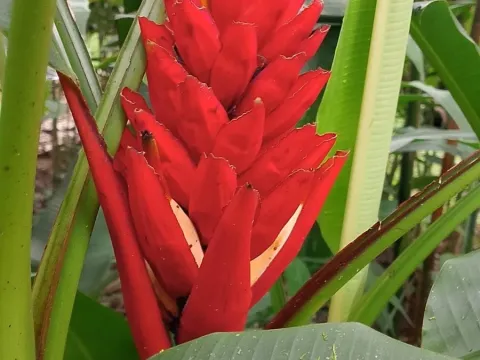
Scarlet banana
Musa coccinea
Musa coccinea, commonly known as the Scarlet banana, belongs to the Musaceae family. It is a striking ornamental plant valued for its vibrant red bracts and long-lasting inflorescences that contrast beautifully with its deep green foliage.
What the section contains
Scarlet banana
Native to the tropical regions of Southeast Asia, this species thrives in humid forest environments. When cultivating, it is essential to mimic these conditions by ensuring a warm climate with temperatures consistently above 20 degrees Celsius.
This plant requires a well-draining, nutrient-rich soil mix. A mixture of peat, perlite, and organic compost is generally ideal to ensure the roots remain healthy and free from oxygen deprivation due to waterlogging.
Bright, indirect light is necessary for healthy development. While it appreciates tropical sunshine, protection from harsh, direct rays is crucial to prevent leaf scorch and maintain the plant's aesthetic appeal.
Regular fertilization during the growing season is necessary to support the production of its unique inflorescences. Using a balanced liquid fertilizer every two weeks promotes robust growth and vivid color intensity.
Spider mites are the most common pest problem for Musa coccinea. They thrive in dry indoor air, causing the foliage to lose its luster and develop fine webbing across the leaves.
Mealybugs can also infest the plant, settling in the crevices between the pseudostems. These pests feed on plant sap, leading to stunted growth and the potential for secondary fungal infections.
Root rot is a major threat caused by overwatering or poor drainage. Once established, it can quickly weaken the root system, making the plant susceptible to environmental stresses.
Aphids occasionally target the tender new leaves of the Scarlet banana. Keeping the plant in a well-ventilated area helps to discourage these insects from establishing large colonies.
Preventative care, including regular leaf misting and occasional insecticidal soap applications, is highly recommended to keep the plant vigorous and free from common infestations.