
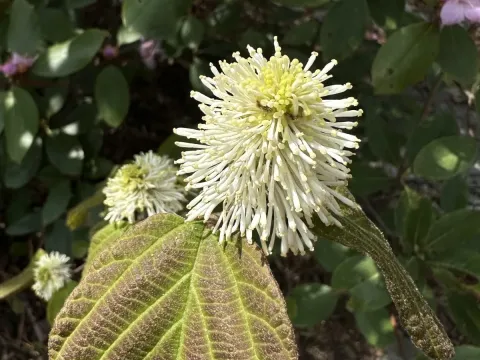
Mountain witch alder
Fothergilla monticola
The mountain witch alder (Fothergilla monticola) is a stunning deciduous ornamental shrub belonging to the Hamamelidaceae family. Native to the southeastern United States, it is highly valued for its fragrant flowers and spectacular autumn foliage colors.
What the section contains
Mountain witch alder
This species thrives in acidic, moist, and well-drained soil rich in organic matter. It is essential to ensure that the planting site has excellent drainage, as the roots are sensitive to waterlogging, and the plant dislikes alkaline soil conditions.
For the best growth and color development, mountain witch alder should be planted in full sun to partial shade. Ample sunlight during the growing season is necessary to encourage the development of the characteristic fiery orange, red, and yellow fall foliage.
Regarding climate, the plant is hardy but benefits from protection against harsh, drying winter winds. In colder zones, applying a layer of organic mulch around the root zone helps protect the shrub and maintains necessary soil moisture levels throughout the year.
Basic maintenance involves regular watering during dry spells, especially for younger specimens. As the shrub matures, it requires minimal pruning, which should only be done after flowering to maintain its natural, slightly spreading growth habit.
One of the primary benefits of cultivating Fothergilla monticola is its inherent resistance to most common garden pests and diseases, making it a low-maintenance choice for many landscapes.
However, environmental stress can weaken the plant. Improper soil conditions, such as chronic overwatering or soil compaction, can predispose the root system to fungal pathogens like Phytophthora, leading to root rot.
Insect pests are generally not a concern. Occasionally, aphids might appear on the tender new growth during the spring, but they rarely reach infestation levels that would cause significant damage to the plant's structural integrity.
Good cultural practices are the best defense against threats. Ensuring proper spacing for airflow and monitoring soil moisture prevents the humid microclimate that favors fungal infections.
In cases of visible stress or pest activity, it is recommended to inspect the plant thoroughly and remove any dead or infected twigs, following up with targeted treatments only if the infestation persists.