
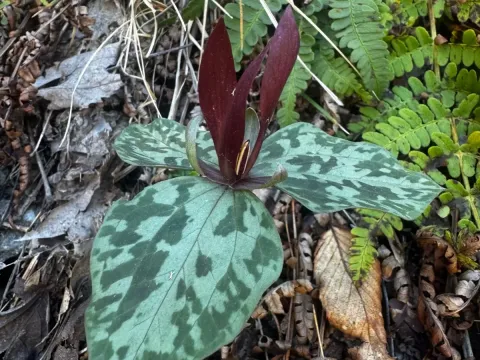
Whippoorwill trillium
Trillium cuneatum
The Whippoorwill trillium (Trillium cuneatum) is a long-lived perennial herbaceous plant belonging to the Melanthiaceae family. It is recognized as one of the largest species within the Trillium genus, highly prized by gardeners for its mottled foliage and sessile flowers.
What the section contains
Whippoorwill trillium
This species is native to the southeastern United States, particularly within the states of Alabama and Georgia. It naturally thrives in the understory of deciduous forests, which dictates its specific environmental needs in a landscape setting.
The culture requires rich, well-drained, and slightly acidic soil with an abundance of humus. High levels of leaf mold mimic the plant's natural habitat, supporting root health and long-term vitality throughout the growing season.
Regarding light, it must be grown in deep to partial shade. The plant is particularly sensitive to direct sunlight, which can cause leaf desiccation and overall decline in plant vigor during the early stages of spring.
Successful cultivation involves maintaining consistent soil moisture during the spring growth phase. However, as the plant goes dormant in the summer, the soil should be kept relatively cool, though it should never be waterlogged during winter dormancy.
Root rot caused by poor drainage and excessive winter moisture is the most significant threat to the survival of the plant. Ensuring a porous, loose soil structure is crucial to prevent the decay of the fleshy rhizomes.
Gastropods, such as slugs and snails, represent the primary insect threat to the Whippoorwill trillium. They are notorious for feeding on the newly emerging succulent shoots in early spring, often requiring active intervention.
Small mammals like voles and mice may consume the rhizomes during the winter months when other food sources are scarce. Protecting the planting area with hardware cloth or mesh is a standard preventative measure in many regions.
Fungal pathogens can occasionally affect the leaves, particularly during prolonged periods of high humidity and poor air circulation. Avoiding overhead watering is recommended to keep the foliage dry and reduce the risk of infection.
General hygiene in the garden is essential to minimize threats. Regularly removing decaying organic debris around the clumps helps prevent the accumulation of pests and disease-causing organisms in the immediate vicinity of the plants.