
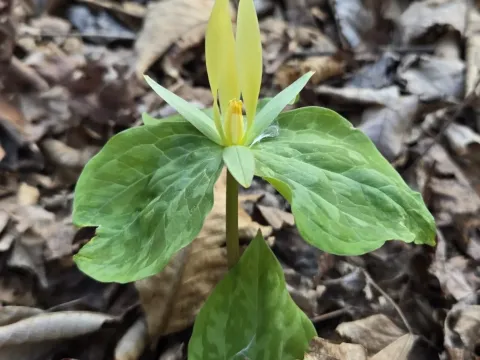
Yellow trillium
Trillium luteum
Yellow trillium (Trillium luteum) is a member of the Melanthiaceae family, highly valued for its aesthetic appeal in woodland garden settings. The most successful time for planting rhizomes is in late summer or early autumn, allowing the plant to establish roots before the ground freezes.
What the section contains
Yellow trillium
Propagation by seed is a slow process that requires patience and specific conditions. Seeds should be sown immediately after collection, ensuring they undergo a cold stratification period to break dormancy. Germination can often take up to two seasons to complete successfully.
Division of mature plants is best performed during the dormant season, typically after the foliage has died back. Care must be taken to minimize root disturbance, as the fleshy rhizomes are brittle and sensitive to mishandling during the transplanting process.
When selecting a planting site, consider the long-term growth of the plant. Trilliums thrive best when left undisturbed for several years, allowing them to form impressive clumps that enhance the beauty of the shade garden.
The spacing between plants should be sufficient to allow for air circulation, typically planting 9 to 12 rhizomes per square meter to achieve a balanced and naturalistic display within the landscape.
Yellow trillium demands specific environmental conditions that mirror its native forest habitat. It thrives in loose, well-draining, humus-rich soil that maintains consistent moisture without becoming waterlogged, which is a common cause of failure for this species.
Ideal lighting conditions involve dappled shade, such as that provided by a canopy of deciduous trees. Direct, intense sunlight can scorch the leaves and lead to premature dormancy, significantly reducing the plant's overall vigor and flowering potential.
Moisture management is critical throughout the growing season. While the plant requires regular water, it is equally important to prevent stagnation. Mulching with leaf litter or organic compost helps regulate soil moisture levels and temperature around the roots.
Cold hardiness is generally sufficient for temperate zones, though winter protection in the form of a light organic mulch is recommended in colder climates to prevent soil heaving and potential damage to emerging spring buds.
Fertilization should be handled with care. A top-dressing of well-rotted leaf mold in early spring provides sufficient nutrients to support growth, avoiding the use of concentrated synthetic fertilizers that may burn the delicate root system.
Yellow trillium is generally resistant to most common garden diseases, provided that soil moisture and drainage are managed correctly. However, in overly damp conditions, fungal infections can affect the foliage and stem, leading to rot.
Slugs and snails are the primary pests that pose a threat to the plant, particularly in spring when the new growth is tender and succulent. These mollusks can rapidly defoliate a plant if not controlled through manual collection or protective barriers.
In addition to mollusks, certain soil-borne pathogens can cause root rot if drainage is inadequate. Ensuring that the planting site has excellent structure and is not prone to flooding is the best defense against such issues.
Integrated pest management strategies are recommended, focusing on maintaining a healthy garden ecosystem. Proper thinning of the canopy and removal of debris can help maintain a dry environment around the plant crown, deterring pests.
- Maintain proper air circulation to prevent fungal growth.
- Use physical barriers like crushed eggshells or copper tape against slugs.
- Monitor for signs of aphids during dry, hot weather spells.
- Always ensure excellent soil drainage before planting.