
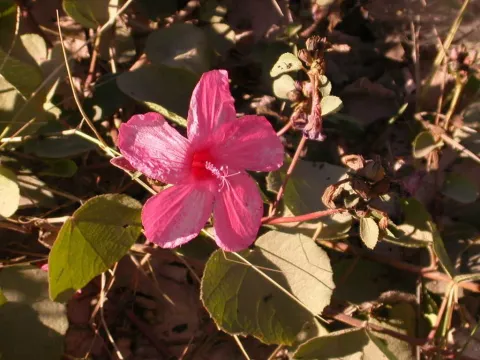
Urena rigida
Urena rigida
Urena rigida is a heat-loving tropical crop, requiring warm soil conditions for successful germination and early establishment of seedlings.
What the section contains
Urena rigida
The sowing process must be scheduled when the soil temperature at planting depth consistently reaches at least +18°C to +20°C to ensure uniform growth.
Seeds are typically sown in wide rows, which allows for sufficient airflow and sunlight penetration between the plants during the growing cycle.
The optimal planting depth is 2–3 centimeters, which balances the need for soil moisture with the necessity of reaching the surface quickly.
Avoiding early spring frosts is critical, as cold snaps can severely stunt or kill young Urena seedlings, negatively impacting the total biomass.
As a member of the Malvaceae family, Urena rigida thrives in regions with high light intensity and requires a long-day photoperiod for development.
The crop prefers fertile, well-drained loamy soils that provide the necessary nutrients while preventing the waterlogging that harms the root system.
High humidity and consistent tropical temperatures ranging from +25°C to +30°C are essential for the rapid vertical growth of the fiber-producing stems.
Water management is vital; while the plant requires significant moisture, it does not tolerate stagnant water or poor drainage conditions.
- Balanced nitrogen application for growth.
- Protection against strong, prevailing winds.
- Maintenance of proper plant density to ensure yield.
The primary economic value of Urena rigida lies in its bast fiber, which is highly valued for its durability and resistance to wear and tear.
Total yield is dictated by the cultivation density, soil fertility levels, and the effectiveness of management practices throughout the vegetation period.
The stems can reach considerable heights when grown under optimal tropical conditions, providing a substantial amount of raw material for fiber processing.
Efficiency in fiber recovery depends on the maturation stage of the plant at the time of harvest and the quality of the retting process.
This crop offers a sustainable alternative for manufacturing industrial textiles, ropes, and biodegradable packaging materials on a commercial scale.
Fungal pathogens represent the most significant threat to Urena rigida, particularly in conditions with excessive moisture and poor field aeration.
Root rot is a common issue caused by waterlogged soils, leading to plant collapse and substantial yield loss if not managed through proper drainage.
Leaf-eating insects and caterpillars can cause severe damage by reducing the photosynthetic capacity of the plant during the critical growth phase.
Aphid infestations are frequently observed, causing sap loss and potentially spreading viruses that result in stunted growth and deformed stems.
Integrated pest management, including regular field inspections and localized insecticide applications, is required to maintain crop health.
The harvest should be conducted during the peak flowering stage to ensure the fiber extracted is of the highest quality in terms of strength and length.
Delaying the harvest results in harder, more lignified stems, which makes the fiber processing more difficult and degrades the final product's quality.
Mechanical harvesting using specialized equipment is the standard approach to collect the stems efficiently before drying them for transport.
Retting, either biological or chemical, is a necessary step to decouple the bast fiber from the woody core, yielding usable industrial raw material.
Once processed, the dried fiber is typically baled and prepared for delivery to industrial facilities for spinning or woven material production.