
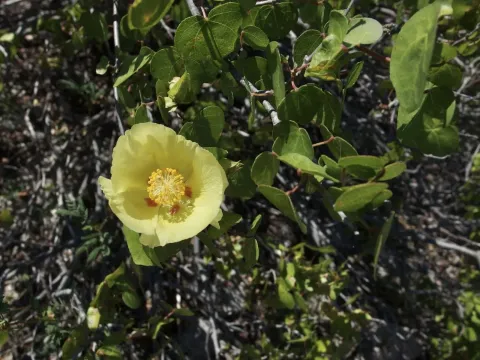
Turner's cotton
Gossypium turneri
Turner's cotton (Gossypium turneri) is a distinct species of wild cotton native to the arid regions of Sonora, Mexico. As a member of the Malvaceae family, it remains a focal point for genetic research aimed at improving drought tolerance in commercial cotton.
What the section contains
Turner's cotton
In a controlled cultivation setting, sowing should occur when soil temperatures consistently exceed 20 degrees Celsius. The seeds require moderate depth, typically 3 to 5 centimeters, to ensure proper germination and establishment in the substrate.
Adequate spacing is crucial to prevent competition for limited water and light resources. Given its growth habit, allowing at least 50-70 centimeters between plants promotes healthy canopy development and air circulation.
The timing of sowing must be synchronized with the local frost-free season. Although the mature plant is hardy, the seedling stage is vulnerable to cold stress, which can lead to significant biomass loss or plant failure.
Proper irrigation at the start of the season encourages deep root development. Once the plant is established, it requires significantly less water, reflecting its native evolutionary adaptation to desert conditions.
This species thrives in well-drained, sandy, or loamy soils. It is particularly sensitive to waterlogging, as its root system is specialized for oxygen uptake in dry, porous soil environments.
Sunlight is the primary requirement for successful growth. The plant is a sun-loving species; therefore, high-intensity solar radiation throughout the day is necessary for the development of productive fruiting branches.
Thermal requirements for Turner's cotton range between 25 and 35 degrees Celsius for active metabolism. It demonstrates high resilience to heat stress, maintaining physiological functions even when ambient temperatures exceed 40 degrees Celsius.
Nutrient management should focus on maintaining a balanced soil chemistry. While the plant can survive in nutrient-poor soils, supplementary potassium improves seed development and overall plant resistance to biotic stress.
Salinity tolerance is one of the key characteristics of this species. It can grow in environments where common commercial cotton varieties would suffer from osmotic stress, making it a subject of interest for saline land reclamation.
Common agricultural pests, such as aphids and spider mites, can affect Turner's cotton, especially in high-density plantings. Monitoring is essential to detect early infestations that can stunt vegetative growth.
Fungal pathogens like Verticillium wilt represent a minor but significant risk, particularly if the soil remains excessively damp. Ensuring proper soil drainage is the most effective cultural practice to mitigate this threat.
Boll-feeding insects, including certain moth larvae, pose a threat to reproductive success. These pests can destroy potential seeds, significantly reducing the viability of a harvest for further research or seed multiplication.
Root-knot nematodes may occur in sandy soils, potentially damaging the root system. Integrated pest management, focusing on biological controls rather than chemical pesticides, is recommended for this sensitive species.
Maintaining high hygiene standards in the field, such as removing debris and preventing water stagnation, helps in keeping the population of pathogens and pests within acceptable thresholds for survival.