
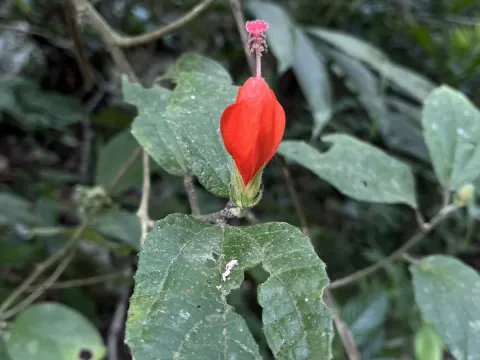
Wax Mallow
Malvaviscus arboreus
Wax Mallow, or Malvaviscus arboreus, is a prominent member of the Malvaceae family. Originating from the tropical regions of the Americas, it is known for its shrubby growth habit and unique, vibrant red flowers that remain partially closed throughout their bloom cycle.
What the section contains
Wax Mallow
The plant thrives in warm climates and requires full sun to partial shade for optimal flowering performance. It is extremely sensitive to freezing temperatures and must be protected or moved indoors during winter in temperate regions.
Soil requirements include well-draining, nutrient-rich substrates with a slightly acidic to neutral pH. Maintaining consistent soil moisture is vital for health, although the plant can tolerate short periods of moderate drought once established.
Cultural practices should focus on routine pruning to encourage branching and prevent the shrub from becoming leggy. Fertilization with a balanced slow-release fertilizer during the active growing season promotes continuous blooming.
In terms of usage, the plant is a staple in pollinator gardens. Because its nectar is highly accessible to hummingbirds and butterflies, it is considered an essential ecological component in landscaping schemes within its hardiness zones.
Common pests affecting Wax Mallow include spider mites and whiteflies, especially when grown in indoor environments with low humidity levels.
Scale insects can occasionally infest the stems and undersides of leaves, requiring manual removal or the application of horticultural oils for control.
Fungal issues such as leaf spot or root rot are typically triggered by poor drainage and excessive irrigation, leading to stunted development.
Effective management includes ensuring proper spacing to allow for airflow and avoiding wetting the foliage directly during watering sessions.
Monitoring for pest activity should occur on a weekly basis, particularly during warmer months when these organisms are most active and reproductive.