
Triumfetta welwitschii
Triumfetta welwitschii
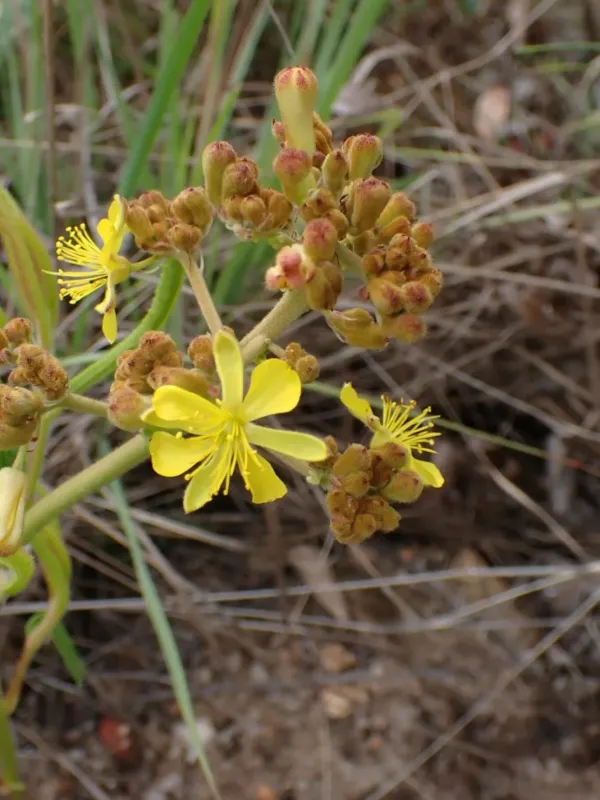
Description
Sowing dates
Triumfetta welwitschii is typically sown at the onset of the rainy season to ensure sufficient moisture for seed germination and initial vegetative establishment. Proper timing is essential to align the plant's growth cycle with seasonal rainfall patterns, which are characteristic of its native habitat.
Seeds are sown in well-prepared, loose soil beds, usually at a shallow depth of approximately two centimeters. Small seeds require close contact with moist soil to trigger germination, making careful seedbed preparation a crucial step for achieving uniform crop emergence.
When grown for fiber production, a high seeding density is generally practiced to discourage lateral branching. This technique encourages the plants to grow taller, thinner stems, which significantly improves the length and overall quality of the resulting bast fibers harvested later.
Soil temperature during the sowing phase should ideally remain above 20 degrees Celsius. Maintaining these conditions supports consistent metabolic activity in seedlings and prevents growth delays that can be caused by cool or waterlogged soil environments.
Agricultural practice for this species focuses on minimal disturbance to maintain soil structure. Direct sowing into prepared ground is often followed by light compaction to ensure that seeds remain fixed in the nutrient-rich top layer while allowing for proper gas exchange.
Growing requirements
As a member of the Malvaceae family, Triumfetta welwitschii is biologically adapted to tropical and subtropical climates. It functions effectively as a multi-purpose herb or small shrub, showing resilience to the environmental fluctuations found in its native African regions.
The plant thrives in well-drained, fertile sandy loam or silty soil types. Excellent drainage is non-negotiable, as the root system is susceptible to decay if exposed to persistent waterlogging, which often occurs during heavy tropical rains in poorly structured soils.
Abundant light is a primary requirement for this crop, as it is highly photophilous. Shade competition from weeds or adjacent high-density crops can severely stunt its growth, negatively impacting the development of the fibrous structures within the stem tissues.
While requiring reliable moisture during the active vegetative growth phase, the plant exhibits moderate drought tolerance once the stems have matured. This adaptive trait allows it to survive in environments where rainfall can be unpredictable after the main growing season concludes.
Soil fertility management primarily involves maintaining organic content, though the species is not considered overly demanding compared to more commercialized fiber crops. Natural soil rejuvenation practices are usually sufficient to maintain sustainable yields over several seasons.
Harvesting
The optimal harvest window occurs at the beginning of the flowering stage. At this developmental point, the stems reach their maximum tensile strength and fiber quality, providing the best yield-to-effort ratio for farmers involved in textile fiber production.
Harvesting involves cutting the stems at the base using traditional hand tools or specialized mechanized equipment. Efficiency during this phase is vital to prevent the gathered biomass from drying out excessively, which can complicate the subsequent fiber extraction processes.
The primary extraction method is retting, where harvested stems are submerged in water to facilitate the microbial degradation of non-fibrous plant tissues. This biological process effectively separates the valuable bast fibers from the woody core of the plant's stems.
After retting, the fiber is carefully cleaned and rinsed to remove residual organic matter. The quality of the final product is dictated by the precision of this cleaning stage, as debris left on the fibers can degrade their appearance and mechanical properties.
Drying is the final step, typically performed under direct sunlight to achieve the target moisture content required for storage. Well-processed fiber from Triumfetta welwitschii is valued for its durability and resistance, serving as a vital resource for cordage and crafts.