
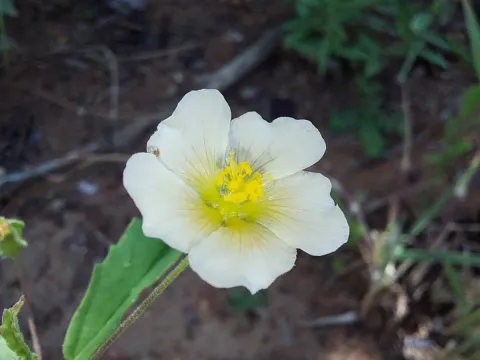
White sida
Sida alba
White sida is a heat-loving crop, therefore planting is recommended only after the soil has thoroughly warmed to a temperature of 12–15 degrees Celsius at the seeding depth. In temperate regions, this period usually occurs in the second or third decade of May.
What the section contains
White sida
The optimal planting depth is 2–3 centimeters, as small seeds require close contact with moist soil for uniform germination. Sowing too deeply can significantly delay emergence or prevent the seeds from reaching the surface altogether.
A wide-row planting scheme with row spacings ranging from 45 to 60 centimeters is recommended. This provides the plants with sufficient space for root and vegetative growth and facilitates subsequent field management and weed control.
The seeding rate depends on seed quality and harvesting methods but generally ranges from 10 to 15 kilograms per hectare. It is essential to use certified seeds with high vigor to ensure a uniform crop stand.
After sowing, the field should be compacted to improve capillary moisture movement toward the seeds. This is a critical stage that significantly increases field emergence and provides a faster start for the crop during early development.
White sida belongs to the Malvaceae family and is a herbaceous perennial capable of adapting to various conditions, although it thrives best in fertile loamy soils with a neutral pH level.
The plant exhibits high drought resistance due to its strong taproot system, yet it requires moderate moisture during the active stem growth phase to maximize biomass production.
The crop has high light requirements, as it is a photophilous plant. Shading by weeds or neighboring crops during the first half of the growing season drastically reduces productivity and fiber quality.
Soils for cultivation must be well-aerated and free of standing water, as waterlogging during the cooler season can lead to root rot and loss of the plantations.
Agronomic management includes regular inter-row cultivation to break the soil crust and suppress weeds. In the early stages, white sida grows relatively slowly, making weed control a mandatory practice for successful crop establishment.
The green biomass yield of white sida, under proper agronomic practices, can reach 30–50 tons per hectare depending on soil fertility and mineral nutrition levels.
The yield of technical fiber represents a significant portion of the stem mass, making this crop promising for the pulp and paper industry and the production of biocomposites.
Seed yield potential varies within 0.5–1.2 tons per hectare, allowing farmers to maintain their own supply of planting material for further field expansion.
Biomass accumulation continues until the onset of the flowering phase, when stems reach an optimal balance between cellulose and lignin content.
Continuous monitoring of crop health allows for the adjustment of fertilizer applications, potentially increasing total output by 10–15 percent under intensive cultivation systems.
Major threats to white sida include fungal infections triggered by high air humidity, which can manifest as leaf spots or stem rot.
Among pests, the greatest danger comes from insects that damage the growing point in young plants, leading to stem branching and poor quality of the harvested fiber.
Disease prevention consists of adhering to crop rotation practices and avoiding high plant density to ensure proper air circulation within the plantation.
To combat pests during critical development stages, approved insecticides are used, provided that strict harvest intervals are respected to ensure product safety.
In certain years, rodents can pose a threat to the crop, requiring regular field border inspections and timely protective measures to manage their populations.
Fiber harvesting begins during the mass flowering stage, when stems have reached maximum height but have not yet become excessively woody, which is crucial for end-product quality.
Rotary mowers or specially adapted grain harvesters designed for long-stemmed crops are used to prevent clogging of the machinery.
If seeds are the primary goal, harvesting should be performed when the seed pods darken, utilizing a two-phase process that involves pre-cutting into swaths for drying.
After harvesting, the green mass must be transported to processing facilities promptly or properly dried to avoid self-heating and the loss of technical fiber properties.
Post-harvest residues can be utilized as organic fertilizer by shredding them and incorporating them into the soil during post-harvest field processing.