
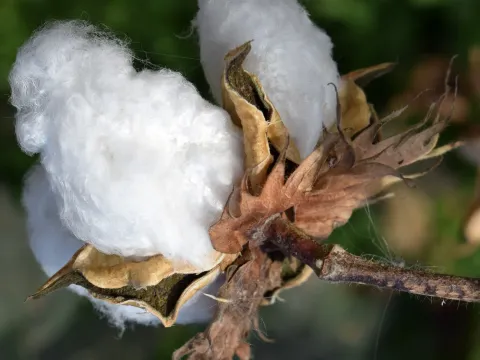
Upland cotton
Gossypium pilosum
Sowing Upland cotton requires soil temperatures to reach a consistent 14–16°C. Proper timing is essential to ensure rapid germination and establish a uniform stand before the peak heat of the season.
What the section contains
Upland cotton
Seeds should be treated with fungicides to protect against soil-borne pathogens during the critical seedling stage. Precise planting depth, usually 3 to 5 cm, is crucial for strong emergence.
Row spacing typically ranges between 60 and 90 cm to facilitate mechanical cultivation and ensure adequate air circulation, which helps reduce the incidence of fungal diseases.
Early-season thinning is a standard practice to maintain optimal plant density, preventing overcrowding which could compete for sunlight, water, and essential soil nutrients.
Effective seedbed preparation, including soil aeration and moisture retention, provides the foundation for a healthy crop that can withstand early developmental stresses.
As a member of the Malvaceae family, Upland cotton thrives in warm climates and requires a long, frost-free growing season to fully mature its cotton bolls.
The crop prefers well-drained, fertile soils with a neutral pH. It is sensitive to soil salinity and requires careful management of fields to prevent waterlogging and chemical imbalances.
Water requirements fluctuate throughout the plant's life cycle; consistent moisture is particularly critical during the flowering and boll-setting stages to ensure maximum fiber yield.
Adequate sunlight is non-negotiable for cotton production. High light intensity promotes photosynthesis, which drives the energy-demanding process of boll development and fiber formation.
Balanced nutrient management, particularly with nitrogen, phosphorus, and potassium, is necessary to support vigorous vegetative growth and high reproductive output throughout the season.
Yield potential in Upland cotton is significantly enhanced by modern agronomic practices, such as precision irrigation and timely nutrient supplementation during peak demand.
The use of high-quality, genetically superior seeds is the primary driver of fiber length and yield consistency, allowing producers to meet demanding textile industry standards.
Effective weed control is essential for maximizing yield, as invasive plants can quickly outcompete cotton for nutrients, thereby significantly reducing the boll count per plant.
Farmers often utilize scouting programs to monitor plant health, allowing for targeted interventions that keep the plant focused on reproductive growth rather than responding to environmental stress.
Sustainable irrigation technologies, like drip systems, have proven highly effective in maintaining optimal soil moisture levels, leading to more stable and predictable harvests over time.
Major threats to Upland cotton include the cotton bollworm and spider mites, which can cause severe damage to both the foliage and the developing bolls if left uncontrolled.
Verticillium wilt is a common fungal disease that affects the vascular system of the plant, often leading to significant yield loss in areas where crop rotation is not practiced.
Integrated Pest Management (IPM) is the gold standard for cotton production, combining biological control agents with selective insecticides to minimize environmental impact.
Crop rotation remains the most effective tool for breaking the life cycle of soil-borne pathogens and ensuring long-term sustainability of the cotton production system.
Early detection through field monitoring is critical; swift action upon seeing symptoms of infestation or disease can prevent the spread across the entire plantation.
Harvesting Upland cotton begins when the majority of bolls have opened, exposing the fiber. Defoliation is often performed to remove leaves, which simplifies machine harvesting and improves quality.
Mechanical harvesting via cotton pickers is the standard in large-scale operations, allowing for high-efficiency collection of the crop within the optimal weather window.
The moisture content of the cotton at the time of harvest is a critical quality parameter; dry conditions are preferred to prevent staining or degradation of the fiber.
After collection, the seed cotton is processed in gins, where the fiber is separated from the seeds, cleaned of debris, and compressed into bales for transport.
Proper post-harvest management, including correct storage conditions, protects the integrity of the cotton fiber, ensuring it retains its value for downstream industrial textile applications.