
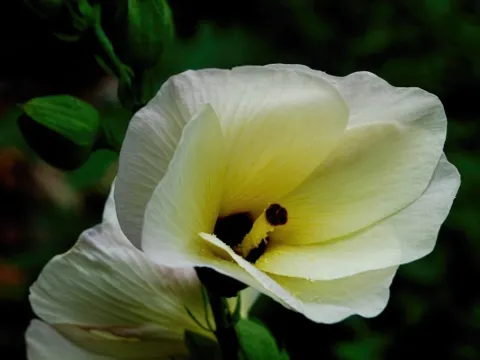
West African okra
Abelmoschus caillei
Abelmoschus caillei is a heat-loving plant, making it essential to sow seeds only when soil temperatures have consistently reached above 15°C to ensure successful germination.
What the section contains
West African okra
In regions with shorter growing seasons, starting seeds in individual containers indoors several weeks before the last frost date is a common and effective practice.
The seeds have a naturally hard seed coat, so pre-soaking them in lukewarm water for 12 to 24 hours significantly improves the uniformity of seedling emergence.
Sowing depth should be maintained at 2 to 3 centimeters, providing enough soil cover to keep the seeds moist while allowing for strong shoot development.
Care must be taken to maintain consistent soil moisture during the germination phase, as dry spells can easily stall the development of delicate young sprouts.
As a member of the Malvaceae family, this crop thrives under full sun exposure and requires a warm climate to produce its distinctive flowers and pods.
Well-drained, fertile soil rich in organic matter provides the ideal medium, with a neutral to slightly acidic pH range supporting optimal nutrient uptake.
The plant is known for its resilience to heat, but it requires regular irrigation during prolonged dry periods to prevent flower drop and ensure steady growth.
Spacing is crucial for this plant, as it develops a robust, spreading habit that needs adequate air circulation to prevent the buildup of humidity and fungal issues.
Protecting young plants from sudden cold snaps or frost is vital, as the species has virtually no tolerance for temperatures approaching freezing levels.
High yields of West African okra are achieved through consistent soil management and regular monitoring of plant health throughout the long vegetative season.
Proper harvesting techniques, focusing on removing pods while they are young and tender, significantly stimulate the plant to produce continuous flushes of new pods.
Total seasonal productivity varies based on soil fertility, consistent water availability, and the specific cultivar planted in the given environmental conditions.
This crop plays a significant role in food security in tropical regions, providing a steady supply of nutritious produce over an extended period of the year.
Commercial plantations often employ specialized field management to optimize plant density and ensure that pods are harvested before reaching the fibrous stage.
Aphids and spider mites are among the most common pests that can compromise the health of the plant by feeding on the sap of tender leaves and developing buds.
Fungal diseases, including various types of rots, can occur if the soil remains waterlogged or if plants are spaced too closely to allow for proper evaporation.
Root-knot nematodes can present a significant challenge in continuous cropping systems, necessitating long-term crop rotation to maintain soil health and vigor.
Integrated pest management strategies, such as biological control or removing infested leaves, are effective ways to mitigate damage without relying on heavy pesticides.
Maintaining good field hygiene, including the removal of crop residues after the season ends, is essential for breaking the life cycle of persistent soil pathogens.
Harvesting should be performed daily or every other day during peak season to ensure that pods are collected at their optimal culinary size of 10-15 centimeters.
Using a sharp tool to cut the pods from the stem is recommended to avoid unnecessary damage to the plant's architecture or the remaining developing fruit.
Freshly harvested pods have a limited shelf life and should be handled with care to prevent bruising, as they contain high water content and sensitive mucilage.
In culinary applications, the pods are valued for their natural thickening properties, making them a staple ingredient in various traditional soups and stews.
For long-term preservation, the pods can be sliced and sun-dried or frozen, allowing them to be stored and used as a nutritious ingredient throughout the year.