
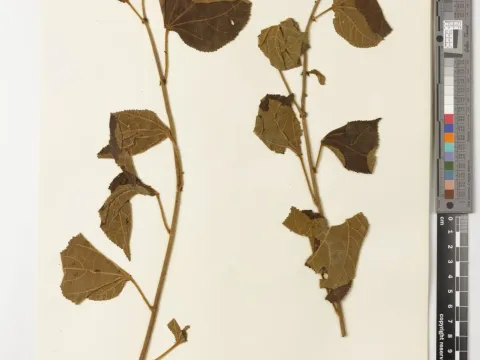
Triumfetta acuminata
Triumfetta acuminata
Triumfetta acuminata belongs to the Malvaceae family, formerly classified within the Tiliaceae. This tropical plant requires consistently high temperatures throughout the germination period to thrive effectively.
What the section contains
Triumfetta acuminata
The optimal sowing time coincides with the start of the rainy season, when soil temperatures reach 22-25 degrees Celsius. Seeds are sown in rows, taking into account the plant's high growth energy during the early stages.
In commercial cultivation, maintaining correct stand density is crucial, as excessive overcrowding results in lower-quality fiber. Standard planting schemes are used to ensure each plant receives adequate space.
The seeds have a tough seed coat, which is why scarification or soaking in growth stimulants is often practiced to improve field emergence. Seedlings typically appear 7-12 days after sowing in moist soil.
During early development, the crop is highly sensitive to weed competition. Consequently, an effective agronomic plan must include manual or mechanical weeding until the plants shade the ground and naturally suppress weeds.
Triumfetta acuminata prefers well-drained, fertile loam soils with a neutral or slightly acidic pH. The plant is highly sensitive to waterlogging, which can lead to root rot and other moisture-related diseases.
This species is photophilic and thermophilic, achieving its best growth in open, sunny locations. The minimum temperature required for active vegetation is 18 degrees Celsius.
Within its native range, the plant shows resilience to short dry spells once established. However, to produce high-quality bast fiber, regular irrigation during the active stem elongation phase is necessary.
For intensive biomass production, the application of nitrogen-phosphorus fertilizers at the beginning of the vegetative cycle is recommended. Soil enrichment with organic matter significantly improves total fiber yield.
The natural distribution area covers tropical zones in Africa and Asia. In agricultural settings, the plants require protection from strong winds, which can damage the stems during the initial rapid growth phase.
The primary economic value of Triumfetta acuminata lies in its production of bast fiber, which possesses physical and mechanical properties similar to jute, making it a viable raw material for the textile industry.
Yields are directly dependent on crop management and seasonal weather patterns. With proper agricultural practices, the yield of dry stems can reach significant volumes suitable for industrial processing.
Beyond fiber extraction, the aerial parts of the plant can be utilized in the production of coarse paper or composite technical materials. The stems contain a high percentage of cellulose, adding to their industrial utility.
The biological productivity of the species makes it a promising candidate for land restoration projects, particularly where rapid vegetation cover and soil organic matter accumulation are required.
The economic feasibility of cultivation depends on the market demand for natural plant fibers. Triumfetta serves as a niche source of eco-friendly, biodegradable raw materials for sustainable manufacturing.
Common diseases affecting this crop include fungal infections of the stems and leaves, often triggered by high humidity and poor ventilation within the canopy, such as anthracnose and various leaf spots.
The most dangerous pests are insects that damage foliage, including various moth caterpillars and aphid species. Significant pest infestations can severely reduce growth rates and total harvest yield.
Root rot, caused by poor drainage and excessive moisture, is a frequent threat to young seedlings. Prevention relies on proper crop rotation and careful management of soil moisture levels.
Management strategies involve the application of systemic fungicides upon the first signs of disease and targeted insecticides during peak pest activity, while prioritizing integrated pest management.
Sanitary field cleaning after harvest is an essential protection measure, involving the removal and destruction of crop residues to prevent the carry-over of pathogens and pest larvae to the next season.
Harvesting is typically conducted during the flowering phase when the fiber content in the stems is at its maximum and the physical properties meet the necessary technical standards.
Stems are cut mechanically and then undergo a retting process to separate the bast fiber from the woody core. The duration of retting depends on water temperature and the condition of the harvested raw material.
After retting, the fiber is thoroughly washed, air-dried, and sorted by length and strength. Drying must take place in the shade to prevent the loss of natural color and fiber elasticity.
Primary processing requires specialized equipment, as manual extraction is labor-intensive. Modern decortication lines allow for the efficient separation of fiber from the core with minimal material loss.
Properly processed fiber provides high-quality raw material for the production of ropes, twine, sacks, and other industrial packing materials that have a consistent market demand.