
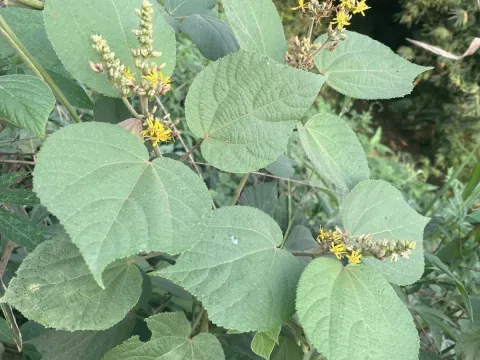
Triumfetta cordifolia
Triumfetta cordifolia
Sowing of Triumfetta cordifolia is primarily conducted at the onset of the rainy season to ensure sufficient soil moisture for successful germination. In tropical regions, this coincides with the start of the spring rainfall patterns.
What the section contains
Triumfetta cordifolia
Seeds require pre-treatment, such as scarification, to overcome the hard seed coat that restricts water absorption. The seeds are typically planted at a depth of 1 to 2 centimeters in well-tilled, loose soil.
A row planting method is preferred, with spacing between rows maintained at approximately 50 centimeters. This density is crucial for producing straight, slender stems suitable for high-quality fiber extraction.
The culture exhibits high germination rates when soil temperatures remain above 25 degrees Celsius. Seedlings usually emerge within 10 to 14 days, provided that irrigation or rainfall is consistent during this establishment phase.
Thinning is performed about a month after emergence, leaving only the most vigorous plants spaced 20–30 centimeters apart. This practice reduces nutrient competition and encourages vertical growth rather than lateral branching.
Triumfetta cordifolia belongs to the Malvaceae family and thrives in humid tropical forest environments. It prefers fertile, well-drained loamy soils rich in organic matter to support its rapid growth cycle.
Optimal soil acidity for this crop ranges from pH 5.5 to 6.5. The plant is highly sensitive to waterlogging, necessitating fields with excellent drainage to prevent root zone suffocation and subsequent decay.
The crop requires bright, diffused light for optimal development; while it can tolerate partial shade, full exposure to intense midday sun in hot conditions may require careful management of air humidity levels.
The ideal temperature range for development is between 22 and 30 degrees Celsius. The plant cannot withstand frost, and exposure to temperatures below 15 degrees Celsius significantly retards growth and physiological activity.
Nitrogen-rich fertilizers are essential to stimulate the vegetative mass needed for fiber production. Incorporating organic compost before planting ensures a steady supply of nutrients and enhances the soil structure.
The economic value of Triumfetta cordifolia is rooted in the high-quality bast fiber extracted from its stems. A well-managed plantation can provide significant yields of raw material for industrial applications.
Fiber yield is strongly correlated with the harvest timing and the quality of post-harvest processing. The extracted fiber is valued for its strength and flexibility, making it ideal for twine and burlap production.
Peak biomass yield is achieved by harvesting the plants just before significant lignification of the stems occurs. Delaying the harvest results in coarser, less flexible fibers that are harder to process.
In optimal conditions, the plant reaches heights of 2 to 3 meters, ensuring sufficient fiber length for industrial use. Productive output is significantly increased by active weed control during the early stages of growth.
While the focus is on vegetative mass, seed production can also be managed for future planting cycles. The overall efficiency of the crop depends on maintaining uniform plant density throughout the growing season.
Fungal pathogens represent the primary threat to plantations, especially in high-humidity conditions. Root rot can quickly destroy young crops if the soil drainage system is compromised or poorly maintained.
Pests, particularly leaf-chewing beetles and certain caterpillars, can cause significant damage to the foliage. Regular scouting and early identification are essential to prevent localized outbreaks from spreading.
Nematodes are a major concern for the root system, causing plant stunting and reduced productivity. Crop rotation remains the most effective management strategy to minimize nematode build-up in the soil.
Bacterial infections can manifest as leaf spots, which impair the plant's photosynthetic capacity. Management strategies include the removal of infected plant debris and improving air circulation within the field.
Sucking insects can weaken the plant by extracting sap from tender shoots. Insecticide usage should be strictly limited to prevent ecological degradation and ensure the crop remains safe for further handling.
Harvesting takes place during the flowering phase, as this is when the stems contain the maximum amount of fiber with optimal mechanical properties. Timing is critical to balancing fiber quantity and quality.
Stems are cut as close to the base as possible using hand tools or mechanized cutters. Care must be taken not to damage the root crown if the plantation is intended for ratoon cropping, although annual cycles are standard.
After harvesting, the stems are bundled and subjected to retting. This process involves immersion in water to allow biological decomposition of pectin, which binds the fibers to the woody stem tissues.
The duration of retting depends on water temperature and fiber density, typically lasting between 7 and 14 days. Monitoring is necessary to prevent over-retting, which could compromise the tensile strength of the fiber.
Once retted, the fibers are washed in running water and dried in the shade. Direct, intense sunlight should be avoided during drying to prevent the fibers from becoming brittle and losing their natural color.