
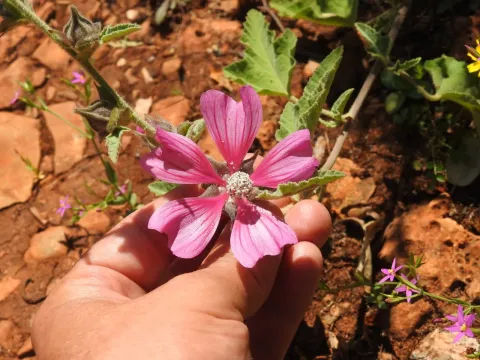
Tree lavatera
Malva olbia
Malva olbia, also known as tree lavatera, belongs to the Malvaceae family and is an evergreen semi-shrub often used in both ornamental and agricultural contexts. The sowing process typically begins in late spring, once soil temperatures remain consistently above 12 degrees Celsius.
What the section contains
Tree lavatera
For container-grown seedlings, sowing is conducted in greenhouses during early spring, typically February or March, allowing for a robust root system before transplanting outdoors.
Seeds should be planted at a shallow depth of approximately 1 to 2 centimeters to ensure adequate light exposure for germination, which is a common requirement for many Malva species.
In field production, row spacing of at least 50–70 centimeters is maintained to ensure that each plant receives enough sunlight and air circulation, reducing the risk of fungal outbreaks.
Once seedlings reach a height of 10 centimeters, they should be thinned to prevent competition for soil nutrients, ensuring that each plant has enough space to grow into a healthy shrub.
The plant thrives in full sun exposure, requiring at least 6–8 hours of direct light daily to produce its characteristic foliage and maintain vigor during the growing season.
Soil requirements focus on fertility and drainage; the plant does not tolerate waterlogged conditions, which can lead to rapid decay of the root collar and lower stems.
Moderate irrigation is necessary during the establishment phase, while established plants show a degree of drought tolerance, especially in deeper, well-draining soils.
Temperature stability is key, with an ideal growth range between 18 and 26 degrees Celsius. While it can withstand mild frost, severe winters may cause dieback of the tender branches.
Soil pH should ideally be neutral or slightly alkaline, as Malva species generally perform better in soils rich in organic matter and essential mineral nutrients.
Rust, caused by various fungal pathogens, is the primary threat to the foliage, appearing as distinct orange or brown pustules that weaken the overall health of the plant.
Powdery mildew represents another major issue, especially in late summer when humidity levels fluctuate, creating a white, dusty film on the surface of the leaves.
Pests such as the two-spotted spider mite and various aphid species pose a threat by colonizing the underside of leaves and stripping the plant of its nutritional reserves.
Agricultural management requires the removal of infested plant parts as soon as symptoms appear to prevent the spread of pathogens throughout the entire planting area.
- Regular monitoring of foliage.
- Application of specialized fungicides.
- Crop rotation protocols.
- Sanitation of the growing field.