
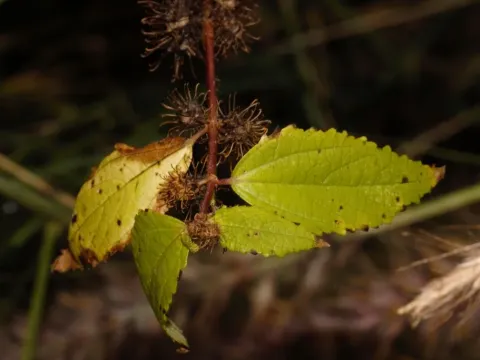
Triumfetta annua
Triumfetta annua
Triumfetta annua is an annual herbaceous plant belonging to the Malvaceae family. In tropical climates, where it thrives, sowing typically occurs at the onset of the rainy season to ensure rapid and robust development of the plant biomass.
What the section contains
Triumfetta annua
Successful germination requires stable soil temperatures within the range of 20 to 25 degrees Celsius. Moisture management during the emergence phase is critical, as seedlings are highly vulnerable to dehydration if the topsoil dries out too quickly.
Sowing density varies depending on the intended use; for high-quality fiber production, dense sowing with 15–20 cm spacing between rows is recommended. This practice encourages the formation of straight, unbranched stems, which are preferred for industrial fiber extraction.
Seeds should be sown at a depth of 1–2 centimeters. Planting deeper than this threshold can significantly reduce germination energy, leading to gaps in the stand and a subsequent decrease in overall plantation productivity.
In regions with distinct dry seasons, it is crucial to select early-maturing varieties that can complete their vegetative cycle before moisture stress sets in, ensuring the structural integrity of the harvested fibers.
The crop is highly sensitive to temperature fluctuations and thrives in warm conditions ranging from 25 to 32 degrees Celsius. Exposure to frost, or even prolonged cool weather, can lead to stunted growth and failed harvests.
The plant prefers well-drained, fertile loam or sandy loam soils with a neutral to slightly acidic pH. Rich organic matter content is essential for maximizing biomass production, as the crop responds vigorously to nutrient-dense substrates.
While Triumfetta annua is water-loving, it does not tolerate waterlogging. Continuous soil aeration is necessary to prevent root rot, especially in heavy clay soils that may hold excess water during intense rain events.
Nitrogen fertilization during the pre-flowering stage is crucial for stimulating vertical stem elongation, which directly correlates with the length and overall yield of the fiber harvested from the stems.
Fields should be situated in areas protected from strong winds. Tall, succulent stems are prone to lodging, which can complicate mechanical harvesting and lead to fiber damage if stems touch the soil for prolonged periods.
The yield of Triumfetta annua is primarily evaluated based on the dry fiber output per hectare. Strategic agricultural management, including timely weeding and nutrient application, is key to achieving commercially viable yields.
Productivity metrics are highly dependent on plant density and the timing of the harvest. By targeting the peak of the flowering stage, producers can maximize the quality-to-quantity ratio of the extracted fiber.
Beyond fiber, the plant offers secondary value as a source of biomass for the cellulose industry. The woody residues remaining after fiber stripping can be processed into paper pulp or composite construction materials.
Ongoing selective breeding programs aim to improve the fiber-to-stem ratio, making this plant more competitive against traditional bast fiber crops like jute or kenaf in international markets.
Consistent maintenance of plantation hygiene and timely pest management are vital to ensuring that the stems remain intact and free of lesions, which are necessary for producing high-grade, uniform fiber products.
Leaf-eating insects pose the most significant threat to this crop, as they can rapidly defoliate the plant during its peak growth phase, severely impacting the photosynthetic capacity and final biomass yield.
Root diseases, often caused by pathogenic fungi in poorly drained soil, represent a significant risk. Preventive measures include crop rotation and ensuring soil drainage to keep the root zone oxygenated.
Nematodes are a persistent threat in soils where the crop is grown continuously without rotation. Implementing a diverse crop rotation strategy involving legumes or grains helps break the parasite life cycle.
Weeds compete aggressively with young seedlings for nutrients and sunlight. If not controlled during the first month, weed encroachment can stunt growth and result in thin, brittle stems that produce lower-quality fiber.
Bacterial stem infections can occur if the plant surface is damaged by tools or pests. These infections create discolored patches in the fiber, reducing its market value and strength during processing.
Harvesting is typically scheduled at the full flowering stage. This timing is essential because the fiber reaches its peak in terms of length, tensile strength, and flexibility, which are the main quality indicators for textile use.
The stems are mechanically cut as close to the soil surface as possible to maximize the harvested length. Specialized harvesters are often used to combine cutting with preliminary stem cleaning in the field.
Post-harvest, the stems undergo decortication, where the bark containing the fibers is separated from the woody core. Depending on the local infrastructure, this may involve water retting or mechanical stripping.
Proper drying of the harvested fiber is essential to prevent microbial growth and degradation. Fiber should be stored at a moisture content of no more than 12–14 percent to ensure long-term stability in storage.
Efficient logistics and transport from the field to the processing facility are necessary to prevent environmental exposure, which can discolor the fiber and reduce its suitability for fine textile applications.