
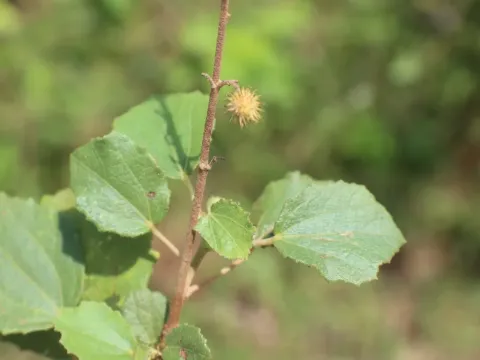
Triumfetta glabra
Triumfetta glabra
Sowing of Triumfetta glabra is primarily performed in the spring season when the soil temperature consistently reaches 18–20 degrees Celsius. To ensure uniform germination, seeds require preparation, including stratification or scarification of the seed coat.
What the section contains
Triumfetta glabra
In its natural habitat, the plant is sown at the beginning of the rainy season, which provides sufficient moisture for sprout development. In controlled agricultural settings, a row-sowing method is practiced with 45–60 centimeter spacing to ensure proper nutrition.
The sowing depth is typically 1–2 centimeters, depending on the soil structure and moisture levels. In lighter substrates, slightly deeper sowing is permissible to protect the seeds from premature drying of the topsoil layer.
Seedlings emerge within 10–14 days after sowing, provided that the soil moisture is maintained at a stable level. It is crucial to monitor plant density to avoid overcrowding, which can hinder the proper vertical formation of the stem.
Optimal planting density ranges from 100,000 to 150,000 plants per hectare. This spacing allows for the production of high-quality fiber with minimal branching, which is essential for industrial processing.
Triumfetta glabra belongs to the Malvaceae family and is an annual or perennial herbaceous plant characterized by an upright stem. As a tropical crop, it requires intense solar exposure and a long daylight duration for full maturation.
The plant prefers loose, fertile loam soils with good drainage and a neutral pH level. Waterlogging is extremely detrimental to the root system, making the selection of sites with slopes or efficient drainage systems a critical success factor.
Throughout the vegetation period, the crop requires consistently high temperatures without significant fluctuations during the night. The optimal temperature range for growth is 25–30 degrees Celsius, and the plant is highly sensitive to frost.
Quality fiber development requires regular nitrogen fertilizer applications during the phase of active stem growth. A balanced supply of phosphorus and potassium is also essential to strengthen cell walls and improve resistance to lodging.
Moisture requirements are high, especially during the first half of the vegetative stage. While the plant can withstand brief dry spells, a deficit of water during critical growth phases significantly reduces the market quality of the stem fiber.
The economic utility of Triumfetta glabra is primarily derived from the extraction of high-quality bast fiber, which is valued for its strength and flexibility. Yield depends significantly on cultivation technology and nutrient availability.
On an industrial scale, the biomass yield can reach 20–30 tonnes per hectare under optimal management practices. The output of pure fiber typically accounts for approximately 10–15 percent of the total weight of raw stems.
The quality of the final product is directly correlated with the harvest timing, which should ideally coincide with the onset of flowering. Delaying the harvest leads to coarsening of the fibers and a reduction in their elasticity.
Beyond fiber production, the plant has potential as a green manure or a forage crop in specific African regions, although further breeding work is required. The biomass exhibits favorable decomposition characteristics.
The seed productivity of the species is quite high, allowing for self-replenishment of planting material at the farm level. Seeds are harvested after the seed pods have fully matured to prevent loss due to shedding.
Primary threats to Triumfetta glabra are linked to fungal diseases that proliferate in high-humidity conditions. Root rot is the most common issue, capable of destroying up to 30 percent of the crop if left unmanaged.
Pests, such as moths and various types of weevils, can cause damage to foliage and stems. To combat these, growers apply broad-spectrum insecticides alongside integrated pest management (IPM) biological control methods.
Weed competition is a significant challenge during the early stages of plant development. Regular weeding and inter-row cultivation are recommended until the leaf canopy closes, which naturally suppresses the growth of competitive vegetation.
Damage caused by insects often serves as an entry point for secondary bacterial infections. Implementing crop rotation helps to minimize the accumulation of soil-borne pathogens and lowers the risk of mass infestation.
Regular monitoring of the fields is essential, with specific attention paid to the root zone state. Detecting infection clusters early allows for the localization of the issue, preventing widespread yield loss across the plantation.
Harvesting is performed mechanically using specialized harvesters designed for bast fiber crops. It is critical to adjust the cutting height precisely to maximize stem length while avoiding the inclusion of the root mass.
The primary processing stage involves retting the stems to separate the fiber from the woody core. Modern practices often utilize biological or chemical retting methods to accelerate the extraction of raw materials.
Once separated, the fiber must be dried under natural or forced conditions to prevent decay and maintain structural strength. The moisture content of the stored fiber should not exceed 12 percent.
Subsequent processing includes combing and sorting the fiber by length and tensile strength. High-quality product finds broad applications in the manufacture of twine, ropes, and industrial textiles.
Utilization of the woody core (shives) as a byproduct of the harvest is an important economic factor. It can be repurposed as fuel, organic compost, or as a filler in the manufacturing of fiberboards.