
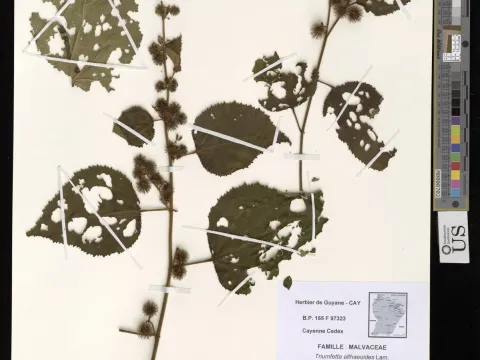
Triumfetta althaeoides
Triumfetta althaeoides
Triumfetta althaeoides is a tropical plant that requires warm soil temperatures, ideally above 20 degrees Celsius, for optimal seed germination.
What the section contains
Triumfetta althaeoides
Sowing is typically performed after the onset of the rainy season to ensure the soil maintains the consistent moisture levels needed for initial growth.
The seeds possess a tough outer layer, making mechanical scarification a highly recommended practice to improve field emergence rates.
For fiber production, high-density planting is preferred, using narrow rows to encourage the growth of long, straight stems with fewer lateral branches.
Direct seeding into a well-prepared seedbed is the standard method, as transplanting is generally avoided due to the plant's sensitivity to root disturbance.
As a member of the Malvaceae family, this species thrives in fertile, well-draining soils with a neutral pH, avoiding waterlogged conditions at all costs.
The crop demands full sunlight exposure throughout the day, which is essential for stimulating stem elongation and increasing overall biomass production.
Optimal vegetative growth occurs in temperature ranges between 25 and 30 degrees Celsius; exposure to cooler temperatures can significantly retard its development.
Consistent moisture is vital during the early stages of growth, although mature plants show moderate resistance to short-term dry spells once established.
Fertilization regimes should focus on nitrogen to promote stem growth, supplemented by potassium to enhance the structural strength of the fibers.
The yield of Triumfetta althaeoides is primarily measured by the total weight of the dry stem material harvested from a given land area.
Fiber quality is significantly influenced by plant density; higher densities produce finer, more uniform fibers suitable for textile and cordage industries.
Effective agricultural management can lead to substantial fiber yields, provided that competition from weeds is kept to an absolute minimum.
Regular monitoring of stem thickness and length allows farmers to estimate yields and plan the timing of the harvest to ensure maximum output.
Sustainability in yield is maintained by integrating crop rotation practices and ensuring that soil nutrient levels are replenished after each harvest cycle.
Young plants are particularly vulnerable to various leaf-chewing insects, which can rapidly defoliate crops if left unchecked during early development.
High humidity levels pose a constant threat of fungal infections, which manifest as leaf spots or stem rot, potentially compromising the structural fiber.
Root-knot nematodes can also be a significant issue in specific soil types, necessitating the use of resistant varieties or integrated pest management.
Weed management is critical during the first six weeks of growth, as the young seedlings are not competitive enough to overcome vigorous weed pressure.
Proactive scouting for pests and diseases is the most reliable way to mitigate damage and protect the potential harvest from significant loss.
Harvesting should be timed precisely during the flowering stage to achieve the ideal balance between fiber volume and long-term durability.
The stems are cut and bundled, then subjected to retting, a process involving soaking in water to separate the useful bast fiber from the woody core.
After retting, the fibers must be thoroughly washed and dried under the sun to remove impurities and prevent the development of mold or dark staining.
Careful handling during the drying process ensures the fibers remain soft and pliable, which adds significant value for industrial processing.
Once dried, the fiber is sorted, baled, and stored in a cool, dry place until it is ready for transport to processing facilities for spinning and weaving.