
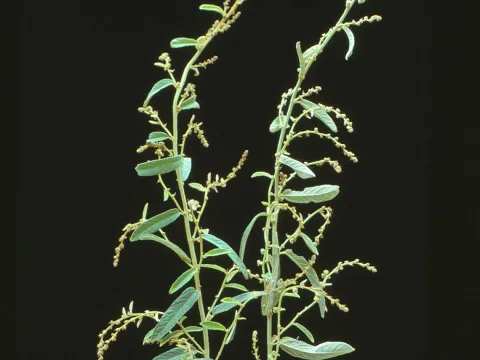
Sida subspicata
Sida subspicata
Sowing of Sida subspicata is typically conducted in the spring when soil temperatures reach 12–15 degrees Celsius. The optimal planting period is late April to mid-May, depending on local climate conditions and soil warming trends.
What the section contains
Sida subspicata
A fine-textured soil seedbed is essential to ensure maximum contact between seeds and the substrate. Seeds should be sown at a depth of 1 to 2 centimeters, which is ideal for their relatively small size.
The recommended seeding rate ranges from 10 to 15 kilograms per hectare when using standard row planting. Maintaining row spacing of 30–45 centimeters is important to facilitate effective mechanical weeding during the early stages of plant growth.
Utilizing precision planters helps ensure uniform plant distribution, which is critical to preventing mutual shading and competition. Pressing the soil after sowing promotes better moisture transfer to the seeds, ensuring uniform emergence.
If there is a moisture deficit in the seedbed, irrigation is highly recommended. Under favorable conditions with adequate moisture and no frost, seedlings generally appear within 10–14 days.
Sida subspicata, a member of the Malvaceae family, has specific requirements for growth. It prefers well-lit areas as it is a light-demanding plant and is sensitive to shading by other vegetation or structures.
The crop is relatively demanding regarding soil fertility, performing best on light loams or fertile chernozem soils. An optimal pH range of 6.0–7.5 ensures efficient nutrient uptake by the root system.
While the plant exhibits moderate drought tolerance, it requires consistent moisture throughout the growing season to produce high yields of biomass. Waterlogging and poor drainage can lead to root rot and stunted development.
Temperature plays a crucial role: active growth begins when temperatures remain consistently above 18–20 degrees Celsius. In temperate climates, Sida subspicata completes its full vegetative cycle before the onset of autumn frosts.
For intensive cultivation, nitrogen fertilization is applied during the active stem elongation phase. Phosphorus and potassium are typically incorporated during initial soil preparation to bolster plant immunity and enhance fiber quality.
The yield potential of Sida subspicata depends significantly on adherence to agronomic standards and adequate moisture levels. With proper management, the crop can produce a substantial volume of vegetative mass.
Average green mass yields range from 30 to 50 tons per hectare under favorable weather conditions. High planting density allows for efficient land utilization and effective solar energy capture during the season.
Dry matter output is dictated by the timing of harvest, which is usually scheduled for the onset of flowering. At this stage, nutrient content in the stems is optimized for either industrial fiber processing or forage use.
For industrial-scale production, complex mineral fertilization is commonly practiced. Furthermore, timely weed control is essential, as competition during the early vegetative stages can significantly hinder crop development.
Yield stability is supported by the plant's capacity for rapid recovery after minor stress events. The implementation of modern drip irrigation systems can further increase total output by 20–30 percent in arid regions.
The primary threats to Sida subspicata are fungal diseases that thrive in high-humidity conditions. Powdery mildew can affect leaves in dense stands with poor aeration, leading to premature yellowing and leaf drop.
Root rot poses a significant risk when cultivating the crop on heavy, poorly drained soils. Maintaining a proper crop rotation system is mandatory to prevent the accumulation of soil-borne pathogens.
Among pests, various leaf-eating insects and thrips can cause significant damage. Early detection allows for the use of biological control methods, minimizing the chemical impact on the agro-ecosystem.
Aphids may infest the young terminals of the plants, causing leaf distortion and reduced growth rates. Regular monitoring during the tillering phase allows for timely insecticide intervention if economic thresholds are exceeded.
Weed infestation during the initial life stages of Sida acts as a major competitor for sunlight and water. Mechanical weeding between rows remains the most effective defense strategy during the early growth period.
Harvesting Sida subspicata is primarily performed mechanically using forage harvesters or specialized headers. The optimal timing depends on the intended final use of the harvested raw material.
When the objective is fiber production, harvesting begins at technical maturity, when stems reach maximum structural integrity. For forage use, the optimal window is during the mass budding phase, before tissue lignification occurs.
The harvested material must be transported immediately for processing or drying to prevent self-heating in stacks. In hot, dry weather, field drying is possible, followed by baling for storage.
The cutting height should be 5–10 centimeters above the ground to ensure high-quality, clean raw material. Modern machinery enables simultaneous chopping of the mass, simplifying subsequent storage or ensiling processes.
Timely harvesting prevents seed shattering if the fields are specifically intended for seed multiplication. Stored products should be kept in well-ventilated facilities with humidity control to maintain long-term quality.