
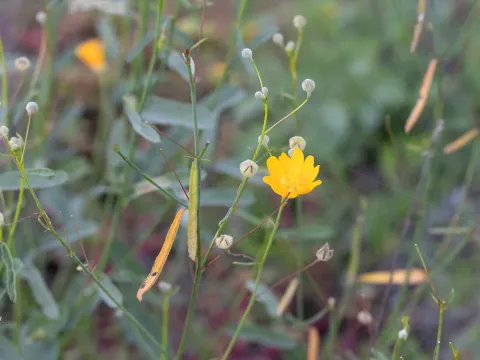
Sida trichopoda
Sida trichopoda
Sida trichopoda is an annual herbaceous plant belonging to the Malvaceae family. Recognized for its rapid development, this species has garnered interest as an alternative fiber crop in various agricultural research programs focused on renewable resources.
What the section contains
Sida trichopoda
The plant originates from tropical and subtropical regions, necessitating warm growing conditions and a long frost-free period. It performs best under full sunlight, which encourages the development of strong, fibrous stems suitable for industrial harvesting.
Soil requirements involve well-drained, fertile substrates with a near-neutral pH level. While the plant can tolerate some environmental variability, it is highly sensitive to waterlogged conditions, which can lead to root degradation and restricted vegetative growth.
Agrotechnical practices include deep soil preparation and the strategic application of fertilizers to support high biomass yields. Weed management is particularly critical during the early stages of growth, as the young seedlings of Sida trichopoda can be easily outcompeted by aggressive grasses.
The primary economic value of the species lies in its potential as a source of bast fiber, often compared to other members of the mallow family. Furthermore, its ability to produce significant biomass makes it a candidate for bioenergy production and sustainable feed mixtures.
Major pests affecting this crop include members of the Aphididae and Miridae families, which feed on the sap and can stunt plant growth. Integrated pest management strategies, focusing on early detection and biological control, are recommended to maintain plant health.
Fungal pathogens causing leaf spots and root rots represent a significant risk, especially in high-humidity cultivation environments. Crop rotation is essential to prevent the buildup of soil-borne pathogens and ensure long-term viability of the production plot.