
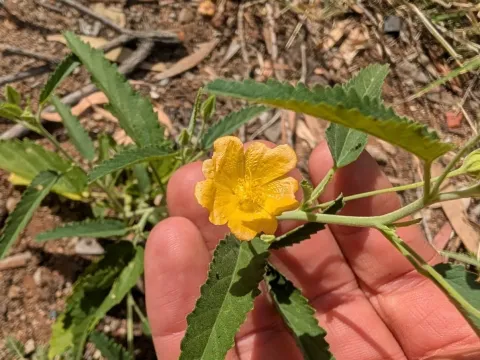
Sida rohlenae
Sida rohlenae
Sida rohlenae is a thermophilic crop, therefore planting dates strictly depend on soil temperature. Sowing should only occur after consistent positive temperatures are established, typically when the topsoil at a depth of 10 centimeters reaches 12-15 degrees Celsius.
What the section contains
Sida rohlenae
The optimal planting window in temperate climates falls between late May and early June. Sowing into cold soil often leads to poor germination and increases the risk of fungal infections in seedlings due to a prolonged germination phase.
For uniform emergence, it is recommended to use precision seeders that ensure a planting depth of 2–3 centimeters. It is important to note that the crop has a long growing season, so delayed planting may limit the biomass accumulation period before autumn frosts.
In regions with short growing seasons, a seedling-transplant method can be utilized. This allows the crop to gain up to 30 days of additional growth, which significantly impacts final yields before temperatures drop.
Seeding density varies based on intended use. For fiber production, high-density schemes are preferred, while seed propagation requires wider spacing to allow for better light exposure of the generative organs.
The crop belongs to the Malvaceae family and has moderate soil fertility requirements. Sida rohlenae performs best on structured loams and chernozems with a neutral or slightly acidic soil reaction.
The plant exhibits high drought resistance once the root system has deeply penetrated the soil horizons. However, for maximum productivity during the first half of the vegetative stage, adequate moisture supply is essential.
High insolation is necessary for the proper development of the crop. Even slight shading can lead to stem stretching, reduced fiber strength, and a slowdown of the overall photosynthetic process.
Sida rohlenae does not tolerate waterlogging or high groundwater levels. Under such conditions, the root system is prone to rapid decay, leading to crop failure or significant thinning of the plant stand.
Mineral fertilization, especially nitrogen application, promotes active biomass accumulation. However, nitrogen excess may negatively affect fiber quality, making it coarser and more brittle.
The yield of Sida rohlenae correlates directly with the intensity of agronomic practices and water availability during critical growth stages. With proper management, dry biomass yields can reach significant levels.
The main marketable product is the stem part, which is rich in cellulose. Harvesting is conducted during the technical maturity phase, when fiber content in the stems peaks and the accumulation of secondary metabolites slows down.
For industrial use, it is important to consider the crop's biological characteristics: fiber quality decreases sharply if harvesting is delayed. The optimal time is determined by the onset of lower leaf yellowing and stem color change.
Seed yield depends on timely pollination and the absence of frosts during the maturation period. The fruits are capsules prone to shattering, so seed plots must be harvested before full biological maturity.
Consistent yields are ensured through crop rotation, where Sida rohlenae returns to the same plot no sooner than every 3-4 years. This prevents the accumulation of soil-borne pathogens specific to the Malvaceae family.
The main pests of Sida rohlenae are coleopteran insects that can damage young seedlings. The sprouts are particularly vulnerable during the first weeks of life when their root system is not yet fully developed.
Under high humidity conditions, plants can be affected by various leaf spot diseases. These are caused by fungal microorganisms that can quickly reduce leaf surface area and overall plant productivity.
Powdery mildew often manifests during periods of sharp temperature fluctuations between day and night. A white coating on the leaves hinders normal photosynthesis, leading to stunted stem growth and fiber degradation.
Root rot remains the most dangerous threat resulting from imbalances in soil water management. Mitigation relies primarily on prevention, including proper drainage and strict adherence to crop rotation cycles.
Sucking insects, such as aphids, are also considered pests, as they can act as vectors for viral diseases. Regular crop monitoring allows for the early detection of infestation hotspots and the application of appropriate biological or chemical controls.
The harvesting technology for Sida rohlenae requires specialized equipment capable of effectively cutting tough, fibrous stems. Rotary mowers or grain combines modified for coarse-stemmed crops are frequently used.
If fiber production is the primary goal, the cut mass is left in the field for partial drying. This process helps reduce raw material moisture, facilitating easier subsequent processing in primary extraction facilities.
For seed harvest, methods that minimize shattering losses are crucial. High seed productivity requires careful handling of the generative plant parts, which are easily lost upon mechanical impact.
After harvest, the field requires mandatory treatment of crop residues. Shredding and incorporating biomass into the soil promotes rapid decomposition and enriches the arable layer with organic matter.
Warehouse storage management requires moisture control. Raw materials with high humidity are prone to self-heating and mold development, which renders the product unsuitable for high-quality industrial processing.