
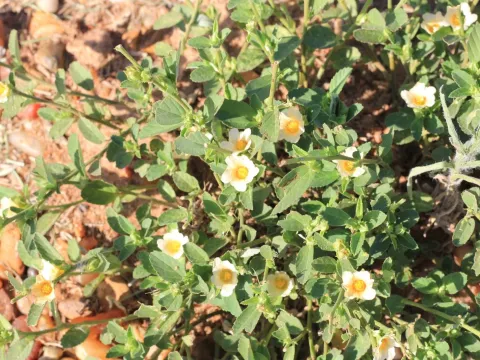
Sida tuberculata
Sida tuberculata
Sida tuberculata is a perennial plant, and the optimal time for sowing is during the spring season when soil temperatures reach a stable 10–12°C.
What the section contains
Sida tuberculata
Seeds should be sown at a shallow depth of 2–3 centimeters to ensure proper germination and firm soil contact, which is vital for the initial establishment phase.
During the first year, the crop develops slowly as it invests energy in establishing a deep taproot system, making weed control during this period essential.
The field must be kept free of weeds in the early stages, as young seedlings are sensitive to competition for sunlight and essential soil nutrients.
Once established, the crop grows vigorously each spring, often emerging earlier than common weeds, which naturally assists in maintaining a clean plantation.
This crop prefers fertile, well-drained loam soils with a neutral or slightly acidic pH, though it is quite adaptable to various environmental conditions.
One of the primary benefits of Sida tuberculata is its remarkable drought tolerance, thanks to a deep root system that accesses moisture from deeper soil layers.
Full sun exposure is necessary for maximizing biomass production, as shading can cause stem lodging and decrease the overall plant density.
Waterlogging must be avoided, as the species is sensitive to poorly drained soils, which can lead to root rot during the dormant winter period.
Application of nitrogen-based fertilizers during the second and subsequent years significantly boosts biomass yield and plant health in intensive farming systems.
Under favorable conditions, Sida tuberculata can produce an annual dry biomass yield of approximately 10–15 tons per hectare, making it a highly productive crop.
Peak yields are typically observed from the third to the fifth year of cultivation once the root system has fully occupied the available soil volume.
The harvested biomass is rich in cellulose, which makes it an excellent raw material for the production of high-quality energy pellets and heating briquettes.
Long-term plantation management reduces costs associated with annual soil preparation and sowing, improving the overall economic feasibility of the crop.
Research into the fiber properties of the stems suggests potential applications in the paper and textile industries, adding value beyond energy generation.
Sida tuberculata possesses strong natural resistance to many common agricultural diseases, leading to a reduced need for chemical plant protection products.
Occasional fungal leaf spots may occur in environments with high humidity and poor air circulation, particularly in over-dense or poorly managed plantings.
Major pests rarely cause significant economic damage, as the chemical profile of the plant is not highly attractive to common insect herbivores.
Preventive maintenance involves managing planting density to ensure adequate airflow, which naturally reduces the risk of fungal proliferation.
Crop rotation protocols should be followed if the plantation is terminated to prevent the buildup of soil-borne pathogens, although it is seldom an issue.
Harvesting is performed in late autumn after the growing season concludes and the moisture content of the stems has naturally reached a low level.
Standard forage harvesters or mowers-choppers are effective for collecting the biomass, depending on the specific industrial requirements for particle size.
For fiber production, harvesting may be scheduled earlier, specifically during the flowering phase, to obtain the highest quality soft fibers before lignification.
Post-harvest drying is recommended to ensure the moisture content is low enough for efficient long-term storage and processing into biofuel products.
The perennial nature of the root system ensures that the crop regenerates successfully in the spring, allowing for a decade of harvests without replanting.