
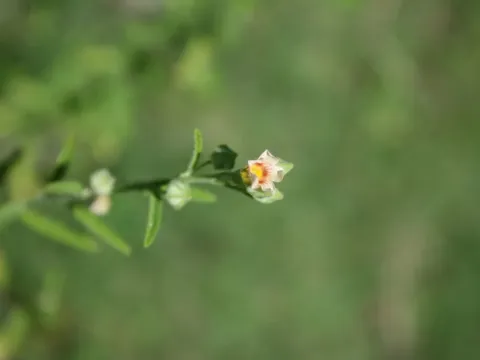
Sida salviifolia
Sida salviifolia
Sida salviifolia is a perennial plant belonging to the Malvaceae family, native to tropical and subtropical regions. Its successful introduction into new areas depends heavily on selecting the correct sowing time to ensure optimal growth.
What the section contains
Sida salviifolia
Sowing should be conducted in late spring once the soil temperature is consistently above +15 degrees Celsius. The species is highly sensitive to cold, and early sowing in frozen or damp soil will lead to seed rot and poor emergence.
The seedbed must be prepared thoroughly, starting with deep plowing in autumn to improve soil structure. In the spring, secondary tillage is performed to create a fine tilth, which is essential for uniform germination.
Seeding depth should be maintained between 2 to 4 centimeters. Precision drilling is recommended to ensure even plant distribution, which helps minimize weed competition and maximizes the yield of the fiber-producing stems.
Post-sowing rolling is highly beneficial, as it ensures adequate seed-to-soil contact, which facilitates the rapid absorption of moisture needed during the critical germination phase of this species.
This crop thrives in well-drained, sandy loam or loamy soils. It is particularly intolerant to waterlogged conditions, which can lead to rapid root decay and stunted development of the entire plant.
The plant requires full sun exposure to achieve its maximum biomass potential. A lack of light results in thinner stems and a significant decrease in the overall quality of the fibers extracted from the bark.
In terms of climate, Sida salviifolia prefers warm environments with high light intensity. It possesses a moderate level of drought tolerance once established, but water stress during the vegetative phase reduces yields.
Soil pH should ideally be within the range of 6.0 to 7.5. On soils that are too acidic, liming is recommended prior to planting to ensure the availability of essential micronutrients required for robust growth.
Adequate nutrition is key, specifically nitrogen application during the early vegetative stage, which promotes the growth of long, straight stems necessary for high-quality technical fiber production.
The primary economic value of Sida salviifolia lies in its bast fiber, which is known for its high tensile strength and durability, making it an excellent alternative to jute and other natural fibers.
Under optimal agronomic management, the yield of green biomass is impressive, often exceeding several tons per hectare. High-density planting strategies are commonly employed to increase the fiber-per-acre ratio.
Beyond textile fibers, the species is increasingly studied as a source of biomass for renewable energy. The high cellulose content in the stems makes it suitable for thermochemical conversion into clean fuels.
Seed production is another viable harvest objective. By allowing specific plots to reach full maturity, farmers can secure a reliable supply of seeds for subsequent seasons, ensuring genetic purity and vigor.
The harvest index is largely determined by the management of weed control in the first two months. A cleaner field significantly improves the uniformity and quality of the final harvested biomass.
Fungal diseases, including stem blight and various leaf spots, represent the most significant threat to plant health, especially under conditions of high humidity and poor ventilation within the crop canopy.
Insect pests such as aphids and spider mites can damage the tender growing tips. If left uncontrolled, these pests weaken the plant, leading to stunted stems and reduced fiber strength at harvest.
Weed management is the most difficult challenge in the early weeks of the crop. Sida salviifolia grows slowly as a seedling, making it susceptible to being overtaken by aggressive grasses and broadleaf weeds.
Integrated pest management strategies are recommended, focusing on crop rotation, balanced fertilization to promote vigorous growth, and the use of targeted applications when economic injury thresholds are met.
Regular field scouting is essential to identify early signs of pathogens or pest outbreaks, allowing for timely intervention that prevents widespread crop loss and minimizes chemical usage.
For fiber production, the harvest occurs at the onset of flowering. At this stage, the plant has achieved maximum height, and the fiber quality is at its peak before the stem becomes too lignified.
Mechanical harvesting is carried out using specialized mowers designed to cut the stems cleanly at the base. Immediate drying is necessary to prevent fermentation or mold growth within the collected biomass.
Retting, the process of separating fibers from the stem, can be done via field retting or controlled water retting. This process is critical for achieving the desired fiber fineness and softness for industrial use.
When harvesting seeds, combine harvesters must be carefully calibrated to handle the small seeds of the Sida genus, ensuring that air speeds and drum clearances are optimized to reduce mechanical damage.
Once harvested, the seeds should be cleaned and stored in moisture-proof containers in cool, dark environments to maintain high viability levels for the following planting season.