
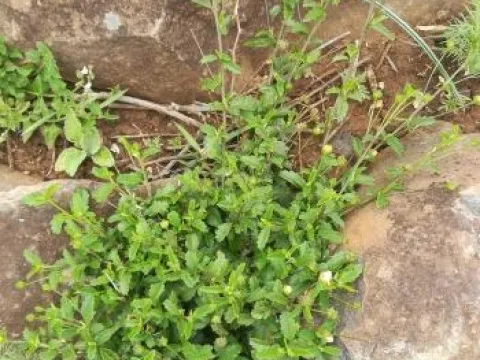
Sida ternata
Sida ternata
Sida ternata is a perennial herbaceous plant belonging to the Malvaceae family, recognized for its significant potential as a biomass-producing crop.
What the section contains
Sida ternata
Originating from warm regions, this species has gained attention in agricultural research for its ability to produce high yields of green matter in various environments.
The plant features a robust root system, which not only aids in water absorption but also contributes to soil stabilization and structure improvement.
The growth cycle is characterized by rapid vegetative development, enabling multiple harvests during a single growing season under favorable conditions.
Proper sowing density is crucial to ensure optimal air circulation and light penetration, which are essential for the healthy development of this perennial crop.
Sida ternata thrives in sunny locations and requires adequate solar exposure to maximize its photosynthetic potential and overall biomass production.
Well-drained, fertile soils with a neutral or slightly acidic pH are ideal, as the crop is sensitive to waterlogging and soil compaction.
While the plant shows moderate drought tolerance, consistent moisture availability is necessary to achieve high-quality harvests, especially during heatwaves.
Temperatures ranging from 20°C to 28°C are optimal for growth; however, the plant requires protection from severe frost during its early establishment phase.
Fertilization management, particularly nitrogen application, plays a vital role in accelerating the growth rate and increasing the total yield per hectare.
The primary use of Sida ternata is in forage production, where it provides high-protein green matter suitable for ensiling or haylage processing.
The fibrous stems offer industrial potential, as the plant produces high-quality fibers that can be processed for textiles, paper, or bio-composite materials.
Under managed conditions, plantations can be highly productive for several years, providing a sustainable source of raw materials for various industries.
As a sustainable crop, it contributes to carbon sequestration and can act as a green manure to enrich soil organic matter content over time.
Total yields depend heavily on the harvesting strategy, with multiple cuts per year providing better quality forage than a single late-season harvest.
Fungal pathogens represent the most significant threat, especially when humidity levels remain high for extended periods, leading to root or leaf rot.
Leaf-feeding insects and aphids are common pests that may require integrated pest management (IPM) strategies to prevent significant economic damage.
Weed control is critical during the initial establishment phase, as young seedlings are poor competitors against aggressive meadow weeds.
Implementing a proper crop rotation schedule helps reduce the buildup of soil-borne pathogens and supports long-term plant health.
Regular field inspection is recommended to identify signs of stress or infestation, allowing for targeted intervention before the problem spreads across the plot.