
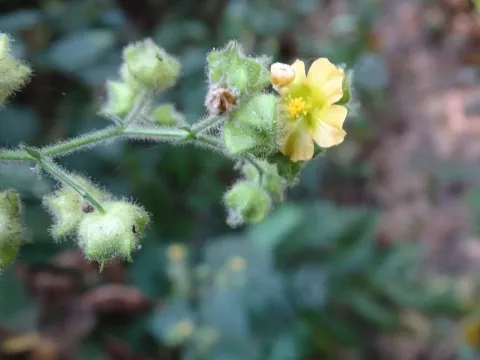
Sida pyramidata
Sida pyramidata
Sowing Sida pyramidata is carried out in warmed soil when the temperature at the seed placement depth reaches stable values of at least 12-15 degrees Celsius. The best time for sowing is considered to be the second half of spring, which allows the crop to use moisture reserves effectively.
What the section contains
Sida pyramidata
The depth of seed placement depends on the soil texture and is usually between 2 and 4 centimeters. When sowing, it is critical to ensure close contact of seeds with the moist soil horizon, which is achieved by mandatory rolling of the plot after the work is completed.
The seeding rate varies depending on the intended use of the crop — for fiber production or green mass. On average, industrial plantations require 10 to 15 kilograms of seeds per hectare, maintaining row spacing of 45-60 centimeters.
To improve germination, it is recommended to subject the seeds to preliminary scarification. This speeds up the germination process and ensures a more uniform emergence of seedlings in the field, reducing the risk of young shoots being suppressed by weeds.
After seedling emergence, thinning is a mandatory agricultural measure in case of excessive density. Optimal plant density before the full vegetation stage allows the crop to maximize its productive potential.
Sida pyramidata belongs to the Malvaceae family and is a robust perennial with a high content of bast fibers. The crop is characterized by pronounced heat-loving properties and the ability to adapt to different types of lighting, preferring open areas.
The plant performs best in fertile loamy and sandy loam soils with a neutral or slightly acidic reaction. An important condition is the absence of stagnant groundwater, as the crop is sensitive to root system waterlogging.
During the active growth period, the crop requires stable moisture, but after rooting, it exhibits high drought resistance. The ability to develop a deep taproot system allows the plant to extract water from deeper soil horizons.
Organic fertilizers are recommended to be applied in the autumn under the main soil tillage. In the spring, before sowing, complex nitrogen-phosphorus fertilizers are applied to stimulate rapid growth of vegetative mass.
The plant responds well to regular inter-row cultivation, which promotes soil aeration and destroys competing weeds. The crop has a high allelopathic potential, suppressing the growth of weeds in the zone of its root system.
The yield of Sida pyramidata depends on the intensity of agricultural technologies and the climatic zone of cultivation. When all requirements are met, the plant is capable of forming a significant volume of biomass suitable for industrial processing.
The yield of dry fiber per hectare can fluctuate depending on the development phase of the plant at the time of harvest. The period of mass flowering is considered optimal, as the accumulation of bast fibers reaches its physiological maximum.
In addition to technical fiber, the crop produces a significant amount of seeds, making it attractive for seed-growing farms. Seed productivity can reach several centners per hectare with proper care of the crops.
The prospects for using the plant are related not only to the textile industry but also to the production of biocomposites. The high strength of the fiber allows considering Sida as an alternative raw material for many industrial sectors.
Yield stability is maintained for several years if crop rotation is followed and fertilizers are regularly applied. After the end of the productive use period, the plantations can be easily plowed and returned to the classic land circulation.
Sida pyramidata has natural resistance to many diseases characteristic of oilseed and fiber crops. However, in conditions of excessive air humidity, fungal infections such as powdery mildew or leaf spot may develop.
The main pests that can damage young crops are insects from the order Coleoptera and caterpillars of some Lepidoptera. To combat them, timely chemical treatment with systemic insecticides is applied.
An important aspect of protection is compliance with quarantine measures when importing seed material from regions where viruses specific to Malvaceae are prevalent. The infection background in the crops is usually controlled by the cleanliness of the agrotechnical background.
In some years, damage from rodents is possible, as they can gnaw the roots of young plants in the autumn period. Regular monitoring of field conditions allows for timely detection of affected areas and minimizes crop losses through localized treatments.
Disease prevention consists of following crop rotation, which limits the accumulation of pathogens in the soil. Alternation of crops significantly reduces the risk of epiphytotic outbreaks on Sida pyramidata plantations.
Harvesting Sida pyramidata is carried out using specialized equipment adapted for harvesting fiber crops. It is important to choose the right time for harvesting, based on the objectives of obtaining raw materials — for fiber or for bioenergy needs.
Technical maturity of the fiber occurs at the stage of the beginning of flowering when the stems remain sufficiently flexible and have not yet become heavily lignified. Early harvesting ensures higher fiber quality but reduces the total mass of the raw material obtained.
Rotary mower-shredders are used for mowing the plantations, which allow preparing the biomass for further transport immediately. In the case of obtaining long fiber, special headers are used that ensure a clean cut of the stem at the base.
After mowing, the biomass is often subjected to natural drying directly in the field. This reduces energy costs for additional drying of the raw material and promotes better separation of the shive from the fiber during subsequent primary processing.
Storage of the harvested crop should be carried out in ventilated rooms or under sheds to prevent the development of mold. High-quality dried raw materials can be stored for a long time without losing their physical and mechanical properties.