
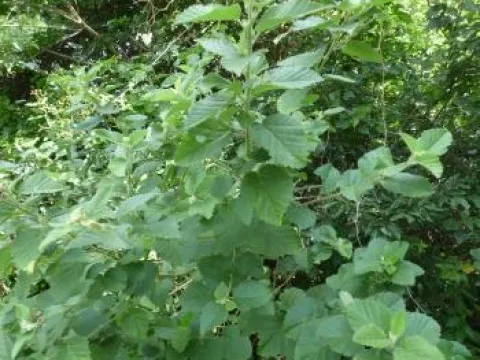
Sida pseudocordifolia
Sida pseudocordifolia
Sida pseudocordifolia belongs to the Malvaceae family and thrives in tropical and subtropical regions. Sowing should occur during the onset of the warm season, ensuring that soil temperatures remain consistently above 18 degrees Celsius for optimal germination.
What the section contains
Sida pseudocordifolia
Seeds are typically sown at a depth of 1 to 2 centimeters. It is crucial to maintain uniform soil moisture during the first two weeks post-sowing, as the seeds are sensitive to desiccation and require consistent hydration to sprout successfully.
In commercial settings, row sowing is preferred with spacing of approximately 45 to 60 centimeters between rows. This spacing allows for proper airflow and root development, minimizing competition among seedlings for essential nutrients and sunlight.
Good quality seeds are essential for reaching a high plant density per hectare. Using precise mechanical seeders can help achieve the desired depth and spacing, leading to more uniform emergence across the entire field.
After emergence, performing early weeding is necessary to ensure the young plants are not overwhelmed by faster-growing weeds. Mechanical cultivation between rows is a highly effective way to manage weeds and promote vigorous early growth.
This crop is highly light-demanding and performs best in areas with full, unobstructed sunlight throughout the day. Shade negatively impacts its metabolic processes, leading to spindly growth and reduced overall biomass production.
The plant is adaptable to various soil types, but it flourishes in well-drained loamy or sandy soils. Waterlogged conditions must be avoided as they significantly increase the risk of root rot and other physiological disorders caused by oxygen deprivation.
Optimal pH levels for cultivation range from 6.0 to 7.5. Regular fertilization, particularly with nitrogen and phosphorus, can substantially increase the vegetative biomass, provided that the plants have adequate water to facilitate nutrient uptake.
The species is quite sensitive to cold temperatures, making it unsuitable for cultivation in regions prone to frost. It is essentially an annual crop in temperate climates where the growing season is restricted by the winter temperature drop.
While Sida pseudocordifolia shows some tolerance to temporary moisture deficits, high yields require consistent water availability. Irrigation is recommended during prolonged dry spells to maintain high levels of photosynthetic activity.
The primary economic focus for this crop is the production of biomass for forage and fiber. When cultivated with proper agronomic practices, the plant can produce significant quantities of vegetative matter throughout the growing season.
Forage production is based on harvesting the plant during the vegetative or early flowering phase to maximize protein and mineral content. This ensures high-quality nutrition for livestock, making it a viable component of tropical forage systems.
Fiber production involves extracting long, sturdy fibers from the stem. The quality and strength of the fiber are dependent on the stage of harvest, with more mature stems producing coarser but stronger fibers suitable for industrial applications.
Yield stability is heavily influenced by planting density and nutrient management. Higher planting densities generally lead to longer, thinner stems, which are often preferred for fiber extraction because they contain a higher proportion of vascular tissues.
Implementing a rotation system and providing sufficient organic amendments are key strategies for maintaining soil fertility and ensuring consistent year-over-year yields in intensive farming environments.
Common pests include sap-sucking insects like aphids and whiteflies, which can weaken the plant and serve as vectors for various viral diseases. Integrated pest management using biological controls or targeted insecticides is usually necessary.
Fungal diseases such as powdery mildew can occur, especially in humid conditions with poor air circulation. Proper spacing between plants and rows helps reduce humidity around the foliage and minimizes the likelihood of major disease outbreaks.
Weeds pose the most significant threat during the establishment phase. Because early growth can be somewhat slow, keeping the field clear of invasive species during the first few weeks is critical for allowing the Sida crop to establish its dominance.
Soil-borne pathogens or nematodes can occasionally affect the roots. Crop rotation is highly recommended to prevent the buildup of soil-borne pests, ensuring that the field remains healthy for subsequent seasons of cultivation.
Monitoring the field for symptoms such as leaf spots, discoloration, or stunted growth allows for early intervention. Prompt management practices can prevent the spread of localized infections across the entire plantation.
Harvesting for forage is performed using mowers, cutting the plants at a specific height that allows for quick regrowth. Timely cutting ensures that the nutritional quality remains high before the plant stems become too fibrous and lignin-rich.
When the crop is intended for fiber production, the stems are harvested later in the season. Post-harvest, the stalks undergo processes like retting, which involves the breakdown of tissues to facilitate the easy extraction of the inner fiber strands.
After the harvest, proper drying of the forage or fiber stalks is essential to prevent mold or rotting. Storage facilities should be well-ventilated and dry to maintain the physical integrity and quality of the final product until it reaches the market.
Seed harvesting requires careful timing; the seed pods should be gathered just as they turn brown but before they split and drop seeds. Drying the pods under the sun followed by mechanical threshing is a standard practice for seed collection.
Field maintenance after harvest, including the removal of crop residues, is important for field hygiene. This reduces the habitat for potential pests and prepares the soil structure for the next planting or rotation cycle.