
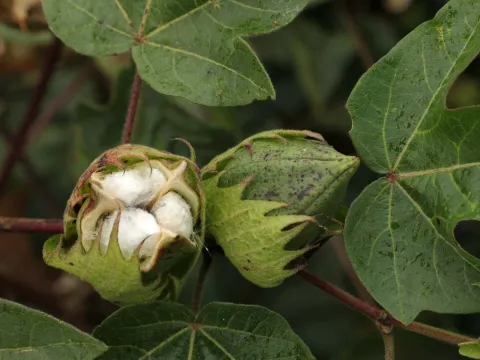
Hybrid cotton
Gossypium hybrids
Sowing dates for hybrid cotton depend critically on soil temperature, as seeds germinate only at temperatures between +12°C and +15°C at the seeding depth. In active farming regions, sowing is typically carried out in April, once the risk of late frosts is eliminated.
What the section contains
Hybrid cotton
The optimal planting depth is 3–5 cm, depending on the soil's mechanical composition and moisture levels. In areas with moisture deficit, pre-sowing irrigation is applied to ensure uniform seedling emergence.
Sowing too early in cold soil often leads to fungal infections, which significantly reduce field emergence. Utilizing hybrid seeds requires strict adherence to planting density, as hybrids possess higher growth vigor than traditional varieties.
Sowing is often combined with starter doses of mineral fertilizers, allowing young plants to develop rapidly during the initial stages. In several countries, drip irrigation is practiced immediately after sowing to boost establishment.
Late sowing is generally avoided, as it shortens the growing season, preventing proper boll maturation and degrading fiber quality.
Hybrid cotton belongs to the Malvaceae family and is a highly demanding, thermophilic crop. For optimal development, the sum of active temperatures during the growing season must reach 3000–4000°C.
The crop prefers fertile loam soils with a neutral or slightly alkaline pH. Saline or waterlogged soils drastically reduce hybrid productivity by hindering root growth and overall development.
Moisture supply is a critical factor; hybrids respond well to regular irrigation during the budding and flowering phases. However, excessive moisture during the maturation phase can trigger secondary growth and impair the quality of the raw cotton.
Plants require intensive sunlight throughout the entire day. Shading leads to square shedding and significant harvest losses.
Agrotechnics include regular inter-row cultivation to ensure root system aeration and to control weed competition for nutrients.
The yield of hybrid cotton is significantly higher than that of open-pollinated populations due to the heterosis effect. Under intensive irrigation conditions, hybrids can produce 50–70 centners of raw cotton per hectare.
The ginning outturn (fiber percentage) of modern hybrids reaches 38–42%, making them economically viable for large-scale textile production.
Actual yield potential depends on strict adherence to the technological protocol, including the application of nitrogen-phosphorus fertilizers and timely implementation of protective measures.
The use of modern hybrids allows for a shorter growing cycle, enabling harvest before the onset of unfavorable autumn weather conditions.
Hybrid stability is generally higher under stress conditions, such as drought or temperature fluctuations, due to their genetic resilience.
Major pests of cotton include the cotton bollworm, spider mites, and aphids, all of which can destroy a large portion of the plant's reproductive organs.
Fungal diseases, such as wilt (Verticillium and Fusarium wilt), represent a serious threat to plantations, especially in high-humidity environments.
To combat pests, integrated pest management (IPM) systems are used, combining biological control methods with targeted systemic insecticide application.
Preventative measures include crop rotation, where cotton is not returned to the same field for at least 3 years to minimize pathogen accumulation in the soil.
Timely defoliation before harvest helps reduce the development of boll rot caused by fungal infections during the final growth stages.
Harvesting hybrid cotton begins when at least 60–70% of the bolls have opened. In industrial-scale operations, this process is mechanized using specialized cotton pickers.
Defoliation is performed beforehand—applying chemical agents to accelerate leaf drop—which simplifies machinery operation and prevents fiber contamination by plant debris.
Collected raw cotton undergoes primary cleaning at collection points to remove impurities and monitor moisture content before being sent for processing.
Optimal moisture for harvested raw cotton should not exceed 12–14% to ensure the preservation of fiber quality during long-term warehouse storage.
In regions where hand-picking is common, the harvest is performed in multiple stages, selecting only fully opened bolls to achieve a higher market grade of raw material.