
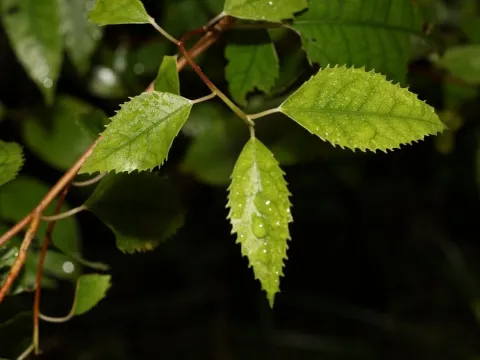
Hoheria
Hoheria
Hoheria, commonly known as lacebark, belongs to the Malvaceae family. These trees and shrubs are native to New Zealand and are widely recognized for their profuse, lace-like white flowers that bloom in clusters during the summer season.
What the section contains


Hoheria
The plant thrives in temperate climates with mild winters. When cultivating Hoheria, it is essential to choose a location that offers protection from harsh, drying winds and provides plenty of sunlight or light dappled shade to encourage vigorous growth.
Regarding soil requirements, this crop demands fertile, moisture-retentive, but exceptionally well-drained soil. It is highly intolerant of waterlogged conditions, making the preparation of a deep drainage layer crucial for plants grown in heavy clay soils.
Agronomic management involves consistent irrigation during dry spells, as drought stress can weaken the plant. Applying an organic mulch around the base helps retain soil moisture and protects the root system from sudden temperature fluctuations.
Hoheria is primarily used in landscaping as an ornamental specimen tree or in mixed shrub borders. Its ability to create a visually striking display during the flowering period makes it a popular choice for gardeners seeking to add structural elegance to their landscape.
Key pests that may affect Hoheria include aphids and scale insects, which often colonize the undersides of leaves or soft new stems. Monitoring these areas is vital to prevent significant damage and to apply targeted control measures when necessary.
Pathogenic threats include various root rots, typically triggered by improper soil drainage or excessive irrigation. Furthermore, powdery mildew may develop during periods of high humidity and poor air circulation, necessitating good pruning practices to ensure the plant stays healthy.