
Howittia
Howittia
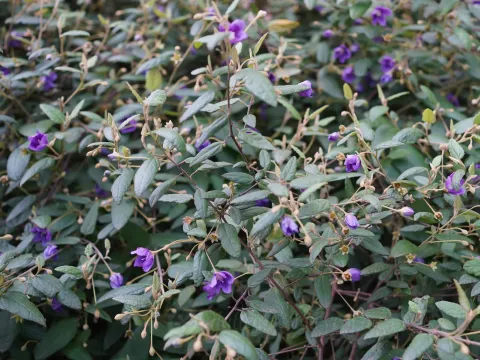
Howittia is a monotypic genus of flowering plants belonging to the family Malvaceae. The genus consists of a single species, Howittia trilocularis, which is native to the Australian continent.
What the section contains

Howittia
This shrub is endemic to Australia, primarily inhabiting forests and scrublands in temperate and subtropical zones. It thrives in sheltered habitats that provide consistent moisture without waterlogging.
Botanically, Howittia is an evergreen shrub that typically reaches heights between 1 and 3 meters. The leaves have a shape characteristic of the mallow family and are often covered in fine hairs, an adaptation to minimize transpiration in warm conditions.
The flowers are solitary and appear in the leaf axils, typically exhibiting shades of pale lilac, pink, or purple. The flowering period generally occurs during the spring and summer, offering significant aesthetic appeal for landscape use.
In cultivation, the plant requires well-drained soil rich in organic matter. It is sensitive to severe frosts, meaning it is often grown in greenhouses or as a container plant in regions with colder climates.
The main pests that affect Howittia are insects common to the Malvaceae family, specifically spider mites and aphids, which thrive in environments with low air humidity.
Fungal diseases, such as root rot, typically arise from poor irrigation management or waterlogged soil, which causes significant damage to the root system and plant vitality.
Powdery mildew can infect the leaf surfaces if there is insufficient ventilation or high humidity within greenhouse environments, necessitating prompt application of fungicides.
To prevent pest infestations, growers are advised to regularly inspect the underside of the leaves and ensure optimal air circulation around the shrub canopy.
Maintaining a balanced nutrient profile in the soil is essential, as weakened plants are significantly more susceptible to pathogen attacks and insect damage during peak growth phases.