
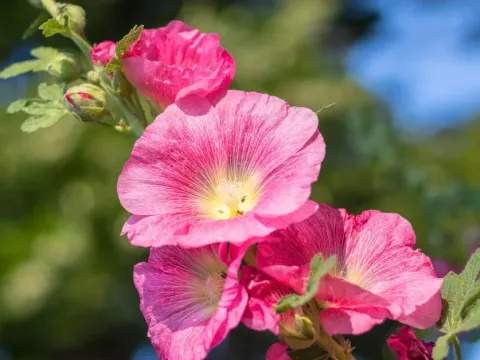
Hybrid mallow
Malva hybrids
Sowing seeds of hybrid mallow in open ground is carried out mainly in the spring, when the soil warms up sufficiently, or in late summer to ensure rooting before winter. The optimal period for spring sowing falls in May, once the threat of frost has passed.
What the section contains
Hybrid mallow
Using the seedling method, seeds are sown in containers as early as March or April, which allows for stronger plants by the time they are transplanted to their permanent location. The temperature for seed germination should be maintained at 18–20 degrees Celsius.
The sowing depth is no more than 1–2 centimeters, which ensures optimal access to oxygen and moisture for the embryo. After sowing, it is recommended to slightly compact the soil surface and moisten it with a spray bottle to ensure firm contact between the seed and the soil.
Seedlings under favorable conditions appear 14–20 days after sowing. It is important to maintain moderate substrate moisture, avoiding drying out, which can lead to the death of young sprouts during the germination phase.
To ensure uniform development, the seedlings are thinned out, leaving a distance of about 40–50 centimeters between plants. This is necessary for proper air circulation and to prevent excessive shading of crop areas.
Hybrid mallow is a perennial herbaceous plant belonging to the Malvaceae family, resulting from selective breeding between various species. It is characterized by a strong root system and tall, leafy stems.
The crop prefers well-lit, sunny areas sheltered from strong winds that could damage the tall flower stalks. Despite its lack of pretentiousness, the most lush flowering is observed in areas with sufficient direct sunlight.
Soil preferences include fertile, loose, and well-drained loams with a neutral pH. The plant does not tolerate water stagnation in the root zone, so areas with high groundwater levels require prior drainage installation.
During the growing season, mallow requires moderate watering, especially during the active formation of buds and the flowering stage. Regular soil cultivation around the bush helps improve aeration and assists in weed control.
Fertilization is carried out using complex mineral fertilizers with a predominance of phosphorus and potassium, which stimulates the initiation of flower buds and makes the petal color more intense and vibrant.
The main disease affecting members of the Malvaceae family is leaf rust. Symptoms of the infection include brown spots on the underside of leaf blades, which eventually lead to premature wilting.
To combat fungal infections, timely treatment with systemic fungicides is applied upon the appearance of the first disease symptoms. An important preventive measure is the removal and destruction of affected plant parts.
Among pests, spider mites and aphids are common on the crop as they feed on cell sap. Massive infestations of these insects can lead to leaf deformation and a significant decrease in the plant's aesthetic appeal.
Against pests, insecticides and acaricides are effective and should be applied according to instructions. It is also recommended to regularly inspect the underside of leaves for early detection of infestation hotspots.
Adherence to agricultural rules, such as proper plant spacing to ensure ventilation, significantly reduces the risk of epidemics and infestation by harmful insects in the fields.