
Hildegardia
Hildegardia
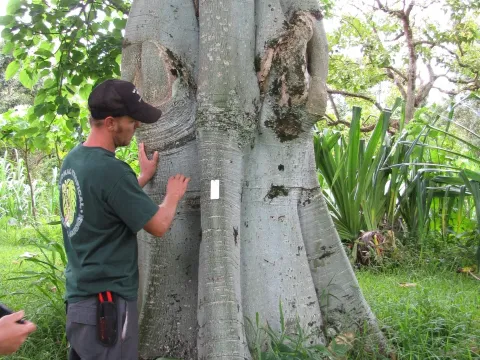
Hildegardia is a genus of deciduous trees belonging to the Malvaceae family. These plants are native to tropical regions of Asia and Africa, thriving in diverse environments ranging from monsoon forests to open, dry woodlands.
What the section contains


Hildegardia
Successful cultivation requires a climate that mimics their natural tropical origin. They demand full sun exposure and well-draining soil structures to prevent root-related issues, which are common in heavy, waterlogged substrates.
The tree exhibits a biological rhythm tied to seasonal water availability. During the dry season, the tree drops its foliage, often followed by a display of striking flowers produced directly on the branches, making it a point of interest for ornamental forestry.
Agricultural management involves careful site selection to ensure consistent temperatures, as the species is highly sensitive to frost. In regions with appropriate warmth, they can be maintained with minimal intervention once established.
Propagation is primarily achieved via seeds, which require specific preparation to ensure high germination rates. Monitoring soil pH is recommended, as these trees perform best in soils that are slightly acidic to neutral in character.
Economically, Hildegardia is valued for its lightweight timber, which is utilized in various small-scale construction projects and local crafts. The wood quality is suitable for applications where strength-to-weight ratio is a key factor.
Harvesting practices are generally conservative to preserve the longevity of these stately trees. Beyond timber production, the genus serves an important ecological role in its native habitat, providing shade and shelter in biodiversity-rich tropical landscapes.